
Industry Applications · 8 min read · Updated 2026-07-15
Best floor coating for forklift traffic: matching the system to the duty
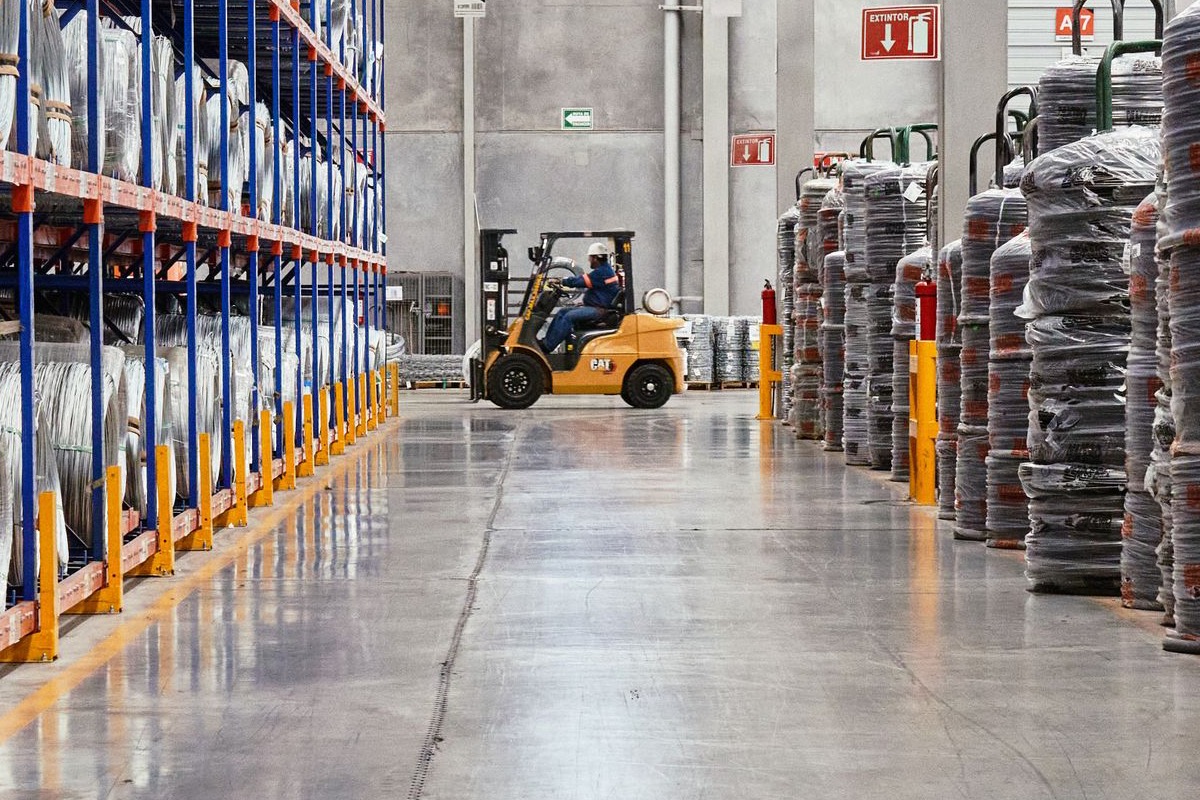
Answer summary
The best floor coating for forklift traffic is the one matched to the actual duty, not the thickest by name. Forklifts damage floors through abrasion in wheel tracks, point-load impact chipping, tyre scuffing, shear delamination at turns, and joint or edge spalling. Resisting them needs adequate film build and abrasion resistance, a resilient system such as a PU screed or epoxy mortar for the hardest duty, a sound bond from correct prep and moisture control, and proper joint and arris treatment. Note that slab load capacity is a structural-engineering matter, not a coating property.
How forklift traffic actually damages a floor
Reach trucks and counterbalance forklifts concentrate load and movement in ways foot traffic never does, and they attack a coated floor through several distinct mechanisms. Understanding each one is what lets you specify against it rather than guessing.
The main failure modes are abrasion and wear-through in the wheel tracks; point-load impact chipping where pallets and loads are dropped or set down hard; tyre scuffing that leaves black marks; delamination where turning and braking put high shear into the bond line; and spalling at joints and arrises where wheels hammer an exposed edge.
Each mode has a different remedy, so a floor that is perfect for one duty can fail under another. The rest of this article maps the damage to the system property that resists it.
What resists each failure mode
Abrasion in wheel tracks is resisted by adequate film build and an abrasion-resistant formulation, so there is enough sacrificial material and the surface wears slowly. Impact chipping is resisted by a tough, resilient system rather than a thin brittle film, which is why the hardest duties move to a polyurethane screed, urethane-cement or an epoxy mortar instead of a roller coat.
Delamination at turns is a bond problem, not a surface problem. High shear at braking and turning zones will lift any coating whose preparation or moisture control was inadequate, so a sound bond from correct mechanical prep and a moisture-tested slab is what keeps the film attached. Joint and edge spalling is resisted by treating joints and arrises deliberately, filling and arris-protecting them rather than running a coating over an unsupported edge.
The table pairs each forklift-induced problem with its cause and the system property or choice that resists it. Prep and moisture testing are covered in their own guides and are assumed here as prerequisites.
| Forklift-induced problem | Cause | What resists it |
|---|---|---|
| Wear tracks in the wheel path | Repeated abrasion under load | Film build plus an abrasion-resistant system |
| Impact chipping | Point loads from dropped pallets and corners | Tough resilient build: PU screed or epoxy mortar |
| Tyre scuffing and black marks | Tyre marking on a soft or undercured film | Harder topcoat and correct full cure |
| Delamination at turns | High shear at braking and turning zones | Sound bond from correct prep and moisture control |
| Joint and edge spalling | Wheels hammering an exposed or unsupported edge | Joint filling and arris treatment |
How abrasion is measured, and where load capacity belongs
When one system is claimed to be more abrasion-resistant than another, the recognised way to compare is the Taber abrasion test, ASTM D4060, Abrasion Resistance of Organic Coatings by the Taber Abraser. It runs rotating CS-10 or CS-17 wheels under a 250 g, 500 g or 1000 g load over a set number of cycles and reports the weight loss in milligrams or a wear index. Use it to compare systems on a like-for-like basis; do not read a Taber number as a real-world lifespan. Impact resistance is assessed separately by falling-weight methods such as ISO 6272 or ASTM D2794, mentioned generically here rather than as a Sparco specification. Where a figure matters, ask for it from the product's technical data sheet and confirm the test conditions match your duty.
One point most often gets confused, so it is worth stating plainly. The load capacity of a slab, expressed in kN per square metre for racking legs, heavy trucks or point loads, is a structural-engineering question about the concrete, its thickness, reinforcement and sub-base. It is not a property of any coating, and Sparco does not publish a slab load rating.
A coating protects the wearing surface; it resists abrasion, impact and chemicals at the top of the floor. It does not increase the structural capacity of the slab underneath, and a resin finish cannot make an under-designed slab carry more load. If your racking layout, truck weights or point loads are increasing, the slab itself must be assessed by a structural engineer, treated as a review separate from the coating specification.
Selecting a system, and the truth about tyre marks
For the heaviest duty, reach-truck lanes, high-frequency traffic and impact zones, the systems designed for the job are Sparco 3-C Polyurethane Screed and Sparco Epoxy Mortar, which are commonly specified where mechanical and impact demands are greatest. For high mechanical duty at a self-smoothing build, Sparcofloor SL 200 is commonly used. Where an abrasion-resistant, non-yellowing topcoat is wanted over a system, Sparcofloor PU 41 and water-based Sparcothane 910 are commonly specified. Actual selection depends on substrate, traffic, chemical exposure and downtime and should be confirmed through technical review.
The follow the diagram below: map the traffic, confirm the slab, select the build level to the duty, apply and treat joints, then line-mark. The single decisive step is matching build level to duty; over- or under-specifying there is the usual root of both wasted money and early failure.
On tyre marks specifically: the black marks forklift tyres leave are often surface marking that cleans off, not coating failure. Softer or underspecified films mark more and hold it more stubbornly, and a harder topcoat with correct full cure reduces both. Blaming a coating for tyre marks before checking whether they clean off is a common misdiagnosis.
-
Map the traffic
Routes, turns, drop zones, loads
-
Confirm the slab
Prep, moisture, joints assessed
-
Select build level to the duty
Screed, mortar or coating to match
-
Apply and treat joints and arrises
Fill joints, protect exposed edges
-
Line-mark traffic lanes
Demarcate routes and pedestrian zones
Match the build level to the real duty before anything else drives the outcome.
Common mistakes
Forklift-floor failures cluster around a handful of specification errors. Each one is avoidable and each is far cheaper to prevent than to reinstate under live traffic.
- Specifying a thin roller coat for a reach-truck lane: it wears through and chips under impact; heavy duty needs a screed or mortar build.
- Ignoring joints and arrises: unsupported edges spall first, whatever the coating.
- Blaming tyre marks on the coating: check whether they clean off before assuming failure.
- Skipping prep or moisture testing: shear at turns will debond a film that was never properly bonded.
Specification checklist
Work through this before committing to a system for a forklift-trafficked floor. It keeps the surface decision and the structural decision separate, which is where most projects go wrong.
- Traffic mapped: routes, turning points, braking and drop zones, truck types and loads.
- Slab confirmed: mechanical prep planned, moisture tested, joints and cracks assessed.
- Build level matched to the heaviest duty on that route, not the average.
- Joints and arrises detailed for filling and edge protection.
- Abrasion and impact expectations checked against TDS figures, not general claims.
- Slab load capacity referred to a structural engineer, separate from the coating spec.
- Traffic lanes and pedestrian zones line-marked after cure.
When to use this system
- Wheel tracks are wearing through or the floor is chipping
- Reach-truck or high-frequency forklift lanes need a durable surface
- Tyre marks and scuffing are becoming a housekeeping problem
- You are specifying a new heavy-duty warehouse or distribution floor
Where it is commonly used
- Reach-truck and counterbalance forklift lanes
- Distribution and logistics warehouse aisles
- Loading bays, pallet drop zones and turning areas
- Manufacturing floors with internal material handling
Related Sparco products
Recommended TDS downloads
Browse the TDS Download Centre →Related market segments
Manufacturing & Warehousing
Production floors and warehouses take forklift traffic, impact, spills and around-the-clock operations. Sparco's full flooring range — from bonding primers and repair mortars to self-smoothing epoxies and polyurethane topcoats — keeps industrial floors serviceable with minimal downtime.
Automotive
Automotive refinishing demands clear coats with fast drying, high gloss and lasting resistance to weather, solvents and polishing. Sparco's 2K polyurethane acrylic clear lacquer range covers standard, fast-dry and MS clear systems for professional body shops.
Related solutions & guides
Frequently asked questions
What is the best floor coating for heavy forklift traffic?
There is no single best coating; the right choice is the system matched to the duty. For the heaviest forklift and reach-truck traffic a resilient build such as a polyurethane screed or epoxy mortar is commonly specified, while lighter duty may suit a high-build self-smoothing epoxy. Selection depends on traffic, loads, chemicals and downtime and should be confirmed through technical review.
Why do forklift tyres leave black marks on my epoxy floor?
Those black marks are usually surface marking transferred from the tyres, not the coating failing, and they often clean off. Softer or underspecified films mark more and hold the marks more stubbornly, so a harder topcoat with a correct full cure reduces the problem. Check whether the marks clean off before assuming the coating has failed.
Can a floor coating increase how much load my slab can carry?
No. Load capacity is a structural property of the slab, its thickness, reinforcement and sub-base, expressed in kN per square metre, and it must be assessed by a structural engineer. A coating protects and hardens the wearing surface but does not add structural capacity to the concrete beneath it.
How is the abrasion resistance of a forklift floor coating measured?
The recognised method is the Taber abrasion test, ASTM D4060, which runs rotating CS-10 or CS-17 wheels under a set load over a number of cycles and reports weight loss or a wear index. It lets you compare systems on a like-for-like basis, but a Taber figure is a comparison tool rather than a predicted service life.
Why do coatings peel where forklifts turn and brake?
Turning and braking put high shear stress into the bond line between the coating and the slab, and any film whose preparation or moisture control was inadequate will lift there first. The fix is prevention: correct mechanical preparation, a moisture-tested slab and a system suited to the shear, so the bond holds under repeated turning.
Do I need a screed or is a normal epoxy coating enough for forklifts?
It depends on the intensity of the traffic. Light or occasional forklift use may be served by a high-build epoxy, but frequent reach-truck traffic, heavy point loads and impact zones usually call for a polyurethane screed or epoxy mortar that can absorb impact and abrasion. Matching the build level to the actual duty is the decisive step.
Related guides
Related project references
Anonymised references from real Sparco projects show how these systems are applied on comparable sites.
Browse project references →Values referenced in this guide come from the products' Technical Data Sheets. Final specification depends on substrate, traffic, chemical exposure and shutdown window — confirm the complete build-up with our technical team.