
Waterproofing & Protective Coatings · 5 min read · Updated 2026-07-07
Waterproofing Coating vs Waterproofing Membrane: Which to Specify?
Answer summary
Liquid-applied waterproofing coatings cure into a seamless film that bonds fully to the substrate and follows complex details, and can be trafficked when built up as a deck system. Preformed sheet membranes suit large, simple areas that will be covered or buried, but depend on their seams. Sparco manufactures liquid-applied coating systems.
What each one is
A liquid-applied waterproofing coating is applied wet — by roller, trowel or spray — and cures into a continuous, seamless film bonded to the substrate. A typical protective build-up combines a damp-tolerant primer such as Sparco Epoxy Bonding Primer #100, a seamless epoxy body coat such as Sparcofloor WBE 400, and where the surface is exposed, a water-resistant polyurethane finish such as Sparco Hybrid Urethane.
A preformed membrane arrives as sheets or rolls that are welded, torched or adhered on site. Its waterproofing integrity depends on the joints between sheets and the detailing at every penetration.
Coating vs membrane at a glance
Neither format is universally superior — the geometry, exposure and traffic of the structure decide. Trafficked decks with drains, upstands and complex details favour seamless coatings; large flat roofs that will be covered or buried can suit membranes.
| Liquid-applied coating | Sheet membrane | |
|---|---|---|
| Format | Cures into a seamless bonded film | Preformed sheets joined at seams |
| Details & penetrations | Follows upstands, drains and complex geometry | Requires cutting and detailing at every penetration |
| Trafficable | Yes, when built up as a deck system | Normally needs a protective screed or cover |
| Weak point | Substrate preparation and application quality | Seams and mechanical damage |
Why coatings are specified as systems
Most waterproofing failures trace to what is under the coating: unrepaired cracks and joints, poor preparation, or moisture the product was not formulated for. That is why liquid waterproofing is specified as a system — repair with an epoxy compound, a damp-tolerant primer, a continuous body coat, and a weather-resistant finish on exposed surfaces — rather than a single product.
In Singapore's humidity, damp-tolerant products matter: primers and water-based epoxies formulated for application on dry or damp surfaces anchor systems where moisture would defeat ordinary coatings.
When to use this system
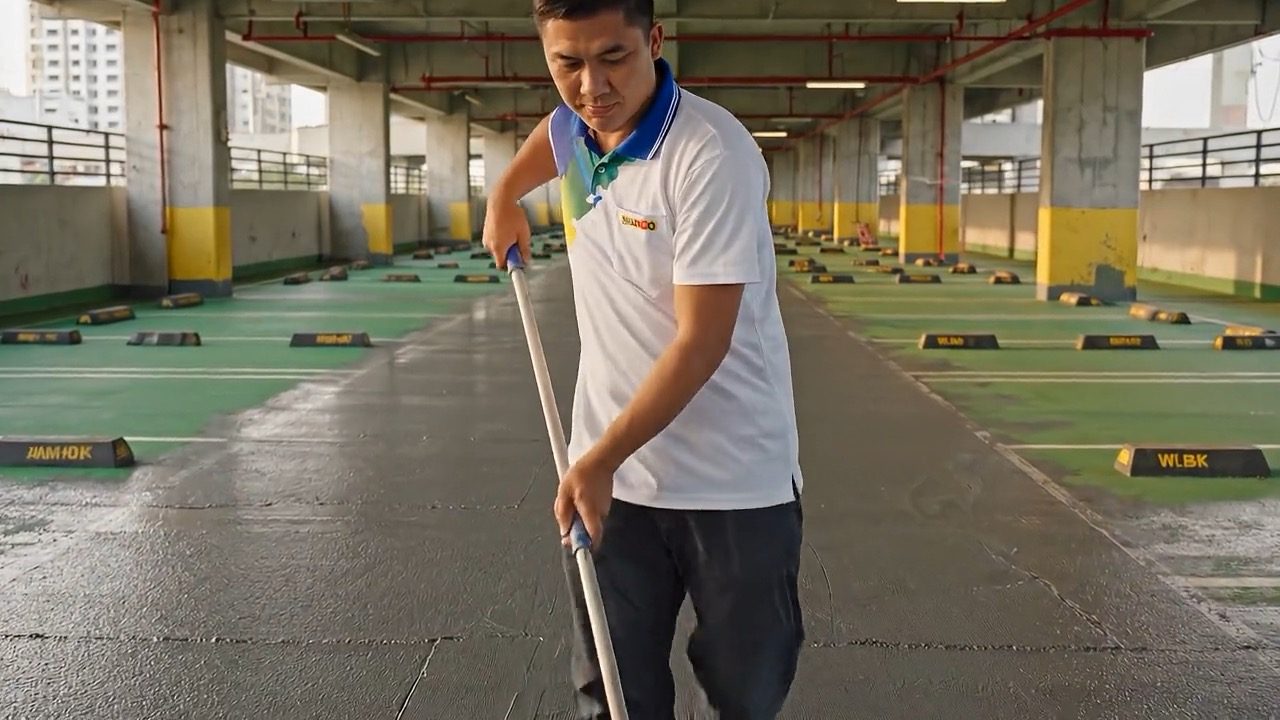
- Trafficked decks (car parks, service decks): liquid-applied deck system
- Complex geometry with drains, upstands and penetrations: seamless coating
- Large simple areas to be covered or buried: sheet membrane may suit
- Damp substrates in tropical climates: damp-tolerant primer + water-based epoxy system
Where it is commonly used
- Car park decks and ramps
- Wet-process floors and washdown areas
- Bund walls and containment areas
- Balconies, walkways and plant decks
Related Sparco products
Sparco Epoxy Thixotropic Compound
Two-component thixotropic epoxy repair adhesive
View product & TDS →
Sparco Epoxy Bonding Primer #100
Solvent-free epoxy primer
View product & TDS →
Sparcofloor WBE 400
Water-based two-component epoxy coating
View product & TDS →
Sparco Hybrid Urethane
Water-based polyurethane coating (single component)
View product & TDS →
Recommended TDS downloads
- Sparco Epoxy Thixotropic Compound — TDS
- Sparco Epoxy Bonding Primer #100 — TDS
- Sparcofloor WBE 400 — TDS
- Sparco Hybrid Urethane — TDS
Related market segments
Car Park
Car park decks face abrasion from turning traffic, hot tyres and constant exposure to moisture and contaminants. Sparco's deck systems pair epoxy and water-based primers with hard-wearing epoxy roller coats, self-smoothing bodies and UV-stable polyurethane topcoats for ramps, decks and demarcation.
Food & Beverages
Food and beverage plants combine thermal shock, frequent washdowns and hygiene requirements that ordinary floors cannot sustain. Sparco's solvent-free epoxy systems and polyurethane screeds create seamless, chemical-resistant surfaces suited to wet process and production areas.
Related solutions & guides
Frequently asked questions
Is a coating or a membrane better for waterproofing?
It depends on the structure. Seamless liquid-applied systems favour trafficked decks and complex details because they bond fully and have no seams; sheet membranes can suit large simple areas that will be covered. The failure modes differ: preparation quality for coatings, seams for membranes.
Can a waterproofing coating be applied to damp concrete?
Some products are formulated for it — Sparco Epoxy Bonding Primer #100 and water-based Sparcofloor WBE 400/410 state suitability for dry or damp surfaces in their Technical Data Sheets. Standing water and active leaks must still be resolved first.
Does Sparco make sheet membranes?
No. Sparco manufactures liquid-applied coating systems — repair compounds, damp-tolerant primers, seamless epoxy body coats and water-resistant polyurethane finishes — and develops custom formulations through its ODM service.
Can a waterproofing coating be walked or driven on?
Liquid-applied coating systems can be specified as trafficable when built up with the right topcoat and, where needed, an anti-slip finish — which is why they suit car park decks and balconies. A layer not rated for traffic should be protected.
Do waterproofing coatings need a primer?
Usually yes. The primer controls absorption and adhesion on the specific substrate, and a damp-tolerant primer is used where the concrete cannot be fully dried. The correct primer is part of the system and depends on the surface.
Related guides
6 min read
Car Park Deck Coatings: Primer, Body Coat and Topcoat Explained
Read guide →
6 min read
How to Read a Technical Data Sheet for Floor Coatings
Read guide →
11 min read
Water Seepage Through a Concrete Floor: Why You Cannot Coat Over It
Read guide →
7 min read
Types of waterproofing: how to categorise the main systems
Read guide →
Related project references
Anonymised references from real Sparco projects show how these systems are applied on comparable sites.
Browse project references →Values referenced in this guide come from the products' Technical Data Sheets. Final specification depends on substrate, traffic, chemical exposure and shutdown window — confirm the complete build-up with our technical team.