
Industry Applications · 6 min read · Updated 2026-07-07
Car Park Deck Coatings: Primer, Body Coat and Topcoat Explained
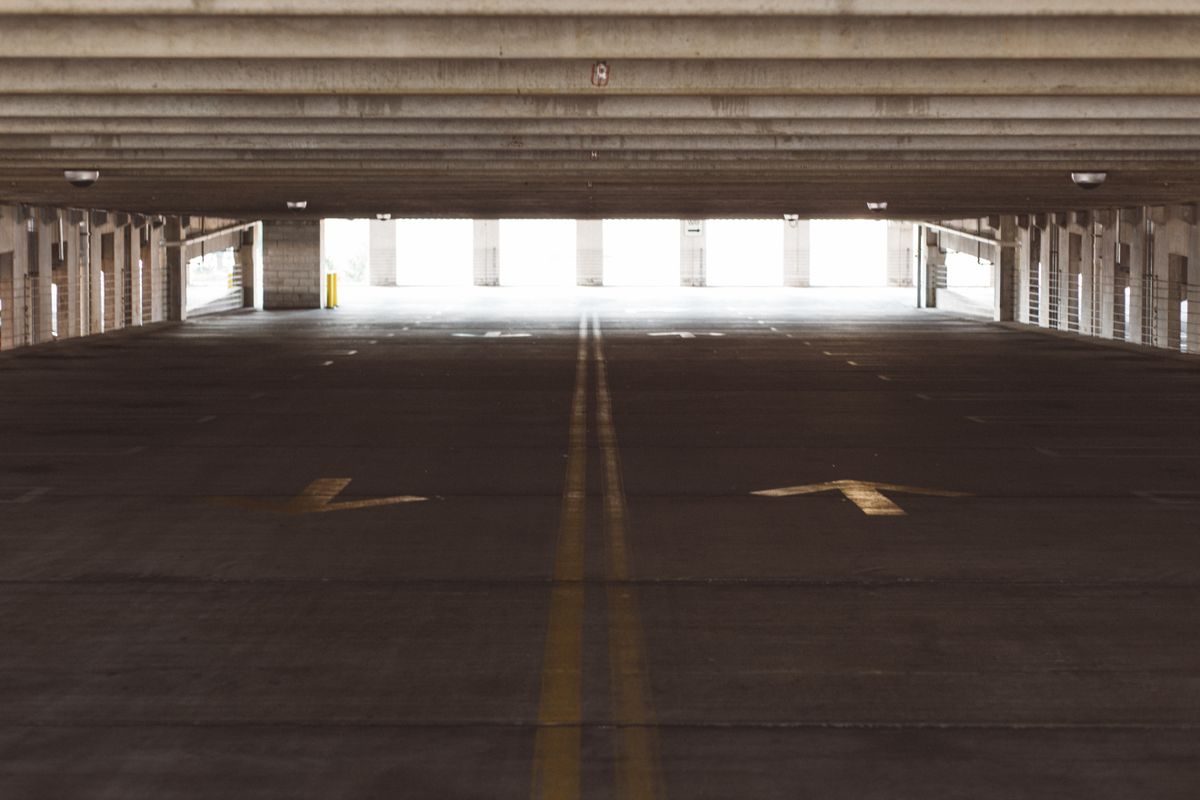
Answer summary
A car park deck coating is a multi-layer system, not one product: defects are repaired, a primer bonds the system to the concrete, an epoxy body coat provides the waterproof wearing layer, aggregate broadcast adds slip resistance on ramps, and exposed decks are finished with a UV-stable polyurethane topcoat that keeps colour and gloss.
Why deck coatings are built in layers
A car park deck must do several jobs at once: shed water instead of letting it penetrate the slab, survive constant tyre traffic and turning loads, stay slip-resistant on ramps, and — on open-air decks — hold its colour under tropical UV. No single material does all of that, so deck systems are engineered as a build-up in which each layer has a role.
The layers below reflect a typical Sparco deck specification; the exact build-up depends on whether the deck is exposed or covered, its condition, and the traffic pattern.
The system, layer by layer
For reference, Sparcofloor 343's Technical Data Sheet indicates cure for foot traffic in around 8 hours and vehicular traffic in around 48 hours at 25 °C — the kind of data that drives deck-by-deck phasing so a car park can stay partially open during works.
- Repair — cracks, joints and spalls made good first (e.g. with an epoxy repair compound); coatings fail at unrepaired defects
- Primer — bonds the system to the slab; damp-tolerant primers such as EcoTough Floor Primer or a solvent-free epoxy primer anchor the build-up
- Body coat — the wearing, water-shedding layer; water-based epoxies such as Sparcofloor WBE 400 are commonly used and tolerate damp substrates
- Anti-slip broadcast — aggregate broadcast into the body coat on ramps, turns and wet zones
- Topcoat — exposed decks take a UV-stable finish such as EcoTough Floor Topcoat (water-based aliphatic urethane) or Sparcofloor 343, which retains colour and high gloss under strong ultraviolet exposure
Exposed decks vs covered decks
Covered intermediate decks are often specified with the epoxy system alone, since UV exposure is limited. Top decks and open-sided ramps see direct sun and rain: there the aliphatic PU topcoat is not cosmetic — it is what keeps the deck sealed, slip-resistant and colour-stable over time, and it doubles as the wearing face of the waterproofing build-up.
Line marking, colour-coded zones and directional arrows are normally applied in the same PU chemistry so they wear at the same rate as the deck around them.
When to use this system
- Exposed roof decks and open ramps: full system including UV-stable PU topcoat
- Covered intermediate decks: epoxy deck system, topcoat optional
- Ramps, turning zones and wet entries: anti-slip aggregate broadcast
- Ageing decks with cracks or ponding: repair and re-coat as a system
Where it is commonly used
- Multi-storey and basement car parks
- Open-air roof decks and ramps
- Loading bays and service vehicle routes
- Driveways of commercial and residential buildings
Related Sparco products
EcoTough Floor Primer
Water-based acrylic floor primer
View product & TDS →
EcoTough Floor Topcoat
Water-based aliphatic urethane coating (two-component)
View product & TDS →
Sparcofloor WBE 400
Water-based two-component epoxy coating
View product & TDS →
Sparcofloor 343
Two-component solvent-based polyurethane floor coating
View product & TDS →
Recommended TDS downloads
- EcoTough Floor Primer — TDS
- EcoTough Floor Topcoat — TDS
- Sparcofloor WBE 400 — TDS
- Sparcofloor 343 — TDS
Related market segments
Related solutions & guides
Frequently asked questions
How long before cars can drive on a coated deck?
It depends on the topcoat and temperature. As a reference, the TDS for Sparcofloor 343 indicates around 48 hours at 25 °C before vehicular traffic. Works are usually phased deck by deck so the car park stays partially open.
Is a car park deck coating also a waterproofing layer?
A seamless deck system sheds water off the slab and is commonly the practical waterproofing for trafficked decks — provided defects are repaired first and the build-up includes a suitable primer and continuous body coat.
What makes ramps slip-resistant?
Aggregate is broadcast into the body coat on ramps and turning zones, creating a textured profile that is then sealed by the topcoat. The aggregate size is chosen to balance grip against cleanability.
What is the difference between an exposed and an intermediate car park deck coating?
Exposed top decks take full sun and rain, so they use a UV-stable, more flexible topcoat and heavier waterproofing; intermediate and basement decks are less weather-exposed and can use a lighter build-up. The deck level drives the specification.
How often should a car park deck coating be recoated?
It depends on traffic volume, turning areas and maintenance; high-turn ramps wear fastest. Regular inspection catches wear early so a topcoat refresh can be planned before water reaches the concrete. Sparco does not publish a fixed interval.
Related guides
5 min read
Waterproofing Coating vs Waterproofing Membrane: Which to Specify?
Read guide →
5 min read
How to Select Anti-Slip Flooring for Wet Process Areas
Read guide →
5 min read
PU Screed Flooring for Washdown and Heavy-Duty Areas
Read guide →
11 min read
Water Seepage Through a Concrete Floor: Why You Cannot Coat Over It
Read guide →
8 min read
How to choose warehouse flooring: a zone-by-zone decision framework
Read guide →
8 min read
RC flat roof waterproofing in Singapore: a system that survives the monsoon
Read guide →
Related project references
Anonymised references from real Sparco projects show how these systems are applied on comparable sites.
Browse project references →Values referenced in this guide come from the products' Technical Data Sheets. Final specification depends on substrate, traffic, chemical exposure and shutdown window — confirm the complete build-up with our technical team.