
Project Planning · 8 min read · Updated 2026-07-15
What drives warehouse epoxy flooring cost in Singapore?
Answer summary
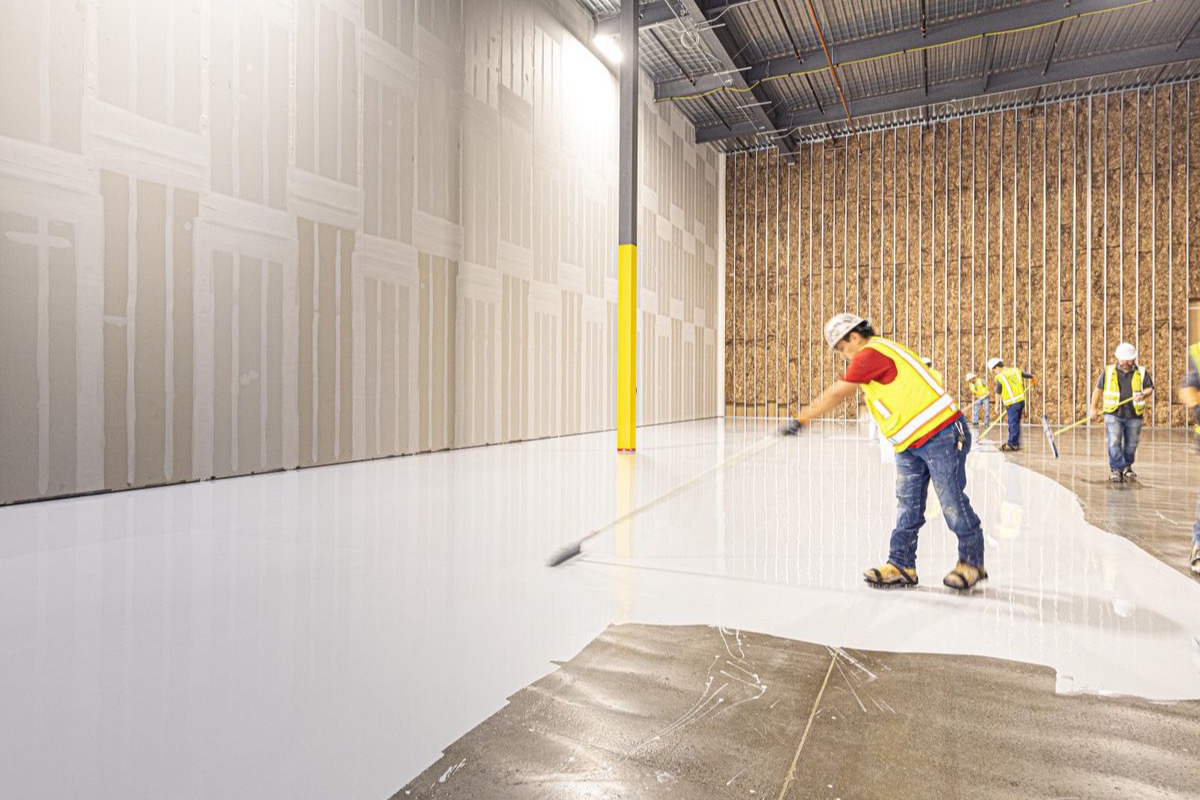
Warehouse epoxy flooring cost in Singapore is best understood as a cost structure rather than a single rate. The largest variables are surface preparation and the system tier chosen, followed by area economics and the downtime a live warehouse can spare. The cheapest quote is usually the one with the least preparation and the thinnest film build, which are the two things a forklift floor most needs, so two quotes are only comparable when both state prep method, system tier, film build per coat and area.
Why we talk about cost structure, not a rate
Asking for a single price per square metre for a warehouse floor is like asking the price of a vehicle without saying whether it is a van or a prime mover. The same floor area can differ several-fold in cost depending on the slab condition, the system tier and the downtime available. Publicly advertised Singapore market ranges reported by third-party aggregators and contractors vary widely, are not Sparco quotations, and are best treated as a reason to compare structure rather than as a rate to anchor on.
This article is about a new installation. It is deliberately distinct from the industrial-floor-coating-repair-cost article, which prices repair and remediation of an existing floor. Think of the two as a fork: new install versus repair. If your slab is already coated and failing, that article answers the pricing question and this one does not re-answer it.
The only fixed numeral worth carrying is a materials sanity-check: Sparco's TDS gives the Sparco Epoxy Bonding Primer #100 a coverage of 6–8 m²/kg/coat. Coverage figures like this let you reason about material quantity per coat, but they are one input among many and do not translate into an installed price.
Slab condition and surface preparation: the big variable
Surface preparation is usually the largest single swing in a new-install budget. Grinding a sound, new power-floated slab to a coating profile is comparatively quick and cheap. Remediating a poor slab, with laitance, contamination, old coatings, cracks or an uneven surface, means more passes, heavier equipment, patching and sometimes a levelling layer before the coating even begins. The slab you start with, not the coating you finish with, sets this line item.
Moisture testing sits alongside preparation. It is a small cost in itself, but the result can change everything downstream: a slab-on-grade that tests wet may need a moisture-tolerant primer or a different system entirely, which moves the budget. Preparation and moisture testing are covered in the concrete-surface-preparation-guide and concrete-moisture-testing-before-coating; here they matter only as the cost drivers that a cheap quote most often trims.
System tier and film build
The system tier is the other large driver, and it scales with film build and number of coats. A thin roller-applied epoxy such as Sparcofloor #102 uses the least material and labour. A self-smoothing epoxy such as Sparcofloor SL 200 is applied at a higher build with more product and more skilled placement. A high-build polyurethane screed such as Sparco 3-C Polyurethane Screed sits at the top, for the heaviest and wettest duty. These are named here only as examples of ascending system tiers and therefore ascending cost bands, not as priced options.
The central argument of this article follows from that ladder: the cheapest quote is usually the one with the least preparation and the thinnest film build, which are precisely the two things a forklift floor most needs. A thin film in a reach-truck lane will wear through and expose concrete long before a correctly built system would, turning a low first cost into an early re-coat. Cost per year of service, not cost per square metre on day one, is the honest comparison.
-
Survey and test the slab
Condition, moisture, contamination, existing floor
-
Choose the system tier for the duty
Thin coat, self-smoothing, or PU screed
-
Scope preparation and film build
Method, profile, number and thickness of coats
-
Price access, downtime and details
Shift work, phasing, anti-slip, line marking, coving
-
Compare quotes like-for-like
Same prep, tier, film build and area basis
The system tier chosen for the duty sets the cost band before a single detail is added.
Area economics, details and downtime
Area changes the economics through fixed costs. Mobilisation, equipment transport and edge or detail work are largely fixed per visit, so a small floor carries them over few square metres and costs more per m², while a large open floor spreads them thin and costs less per m². Cutting in around racking legs, columns and doorways is slower than the open field, so a floor that is mostly edges and obstructions behaves like a smaller floor for pricing.
Detail items add cost on top of the base film: anti-slip broadcast for ramps and wet areas, line marking for traffic lanes and racking, coving at wall junctions, and dressing into drains all take separate labour. Access, working hours and downtime are the last driver. Night, weekend or phased bay-by-bay work in a live warehouse costs more than a clear, empty building, and fast-cure systems are sometimes bought specifically to shorten the shutdown, trading a higher material cost for less lost operating time. Reinstatement of racking, markings and equipment after coating closes the budget.
| Cost line item | What drives it up | What drives it down | Share of a new-install budget |
|---|---|---|---|
| Slab condition & moisture testing | Poor slab, wet slab-on-grade | Sound, dry, newly cast slab | Low to moderate |
| Surface preparation | Contamination, old coatings, levelling needed | Clean profile achieved in few passes | Largest |
| System tier & film build | PU screed, thick self-smoothing, many coats | Thin roller epoxy, fewer coats | Largest |
| Area economics | Small or heavily obstructed floor | Large open floor | Moderate |
| Anti-slip, line marking, coving, drains | Many details, complex demarcation | Plain open field, minimal detail | Low to moderate |
| Access, hours & downtime | Night/weekend, phased live work, fast-cure | Empty building, daytime access | Moderate to high |
| Reinstatement | Reset racking, re-mark, re-fit equipment | Nothing to reinstate | Low |
How to compare two warehouse quotes fairly
Two warehouse epoxy quotes are only comparable when both state the same variables, because a lower headline figure almost always hides less preparation or a thinner film. Ask each contractor to state their prep method and profile target, their system tier and film build per coat, their moisture regime, and how they price edges and details. A quote that will not put these on paper cannot be compared to one that does.
The checklist below is the short form of a like-for-like comparison. Run both quotes through it before you look at the totals.
- Preparation method and profile target
- System tier, product and film build per coat
- Moisture test regime and acceptance limit
- Area and how edges and details are priced
- Anti-slip and line-marking scope
- Cure and return-to-service times
- Working hours and access assumptions
- Warranty scope and what voids it
Common costing mistakes
The mistakes below are the ones that turn a cheap warehouse floor into an expensive one over its life. Each comes from comparing price without comparing scope.
- Choosing on headline price alone without checking prep and film build
- Comparing a thin roller epoxy quote against a self-smoothing or screed quote as if equal
- Skipping moisture testing to save a small cost and risking a full re-coat
- Under-scoping downtime, then paying for rushed night work or an early reopening failure
- Treating this new-install budget as if it also covered repair of an existing failing floor
When to use this system
- Budgeting a new warehouse floor before going to tender
- Comparing two contractor quotes that look far apart on price
- Deciding between thin epoxy, self-smoothing and PU screed on cost grounds
- Weighing fast-cure system cost against lost operating time
Where it is commonly used
- New-build and newly leased warehouse fit-outs
- Re-slotting projects that expose bare slab for coating
- Multi-tenant JTC industrial units with tight shutdown windows
- Phased bay-by-bay coating in live distribution centres
Related Sparco products
Recommended TDS downloads
Browse the TDS Download Centre →Related market segments
Manufacturing & Warehousing
Production floors and warehouses take forklift traffic, impact, spills and around-the-clock operations. Sparco's full flooring range — from bonding primers and repair mortars to self-smoothing epoxies and polyurethane topcoats — keeps industrial floors serviceable with minimal downtime.
Retail
Retail floors must look consistently good under continuous footfall, trolley traffic and daily cleaning. Sparco's epoxy and polyurethane systems balance durability with appearance, keeping front-of-house and back-of-house floors presentable and serviceable.
Related solutions & guides
Frequently asked questions
How much does warehouse epoxy flooring cost per square metre in Singapore?
There is no single reliable rate, because the same floor can vary several-fold with slab condition, system tier and downtime. Publicly advertised Singapore market ranges reported by third-party aggregators and contractors vary widely and are not Sparco quotations. The honest way to budget is to compare cost structure, prep method, system tier and film build, rather than anchor on one headline number.
Why is the cheapest warehouse floor quote often the worst value?
Because the easiest way to be cheapest is to do the least preparation and apply the thinnest film, which are the two things a forklift floor most needs. A thin film in a reach-truck lane wears through to concrete early and forces a re-coat, so the low first cost becomes a higher cost per year of service. Compare quotes on prep and film build, not just the total.
What is the biggest cost factor in a warehouse floor?
Surface preparation and the chosen system tier are the two largest swings in a new-install budget. Preparation depends on the slab you start with, since a sound new slab grinds cheaply while a contaminated or uneven one needs far more work. The system tier scales with film build and number of coats, from thin roller epoxy up to polyurethane screed.
Does the size of the warehouse change the price per square metre?
Yes. Mobilisation, equipment and edge work are largely fixed per visit, so a small or heavily obstructed floor carries those fixed costs over fewer square metres and costs more per m². A large open floor spreads them thin and costs less per m². A floor that is mostly edges and racking legs behaves like a smaller floor for pricing.
Is a new warehouse floor priced the same way as a floor repair?
No, and they should not be compared directly. A new installation prices preparation of a bare slab, the coating system and its details, whereas a repair prices assessment, removal and remediation of an existing failing floor. This article covers new installs; floor repair and recoat pricing is covered separately in the industrial-floor-coating-repair-cost article.
How can I compare two warehouse epoxy quotes fairly?
Only compare them once both state the same variables: preparation method and profile target, system tier and film build per coat, moisture test regime, area and how edges are priced, anti-slip and line-marking scope, cure and return-to-service times, and warranty scope. A quote that will not commit these to paper cannot be compared like-for-like against one that does.
Related guides
Related project references
Anonymised references from real Sparco projects show how these systems are applied on comparable sites.
Browse project references →Values referenced in this guide come from the products' Technical Data Sheets. Final specification depends on substrate, traffic, chemical exposure and shutdown window — confirm the complete build-up with our technical team.