
Problem Solving · 11 min read · Updated 2026-07-08
Epoxy Floor Blistering: Osmosis or Trapped Air?
Answer summary
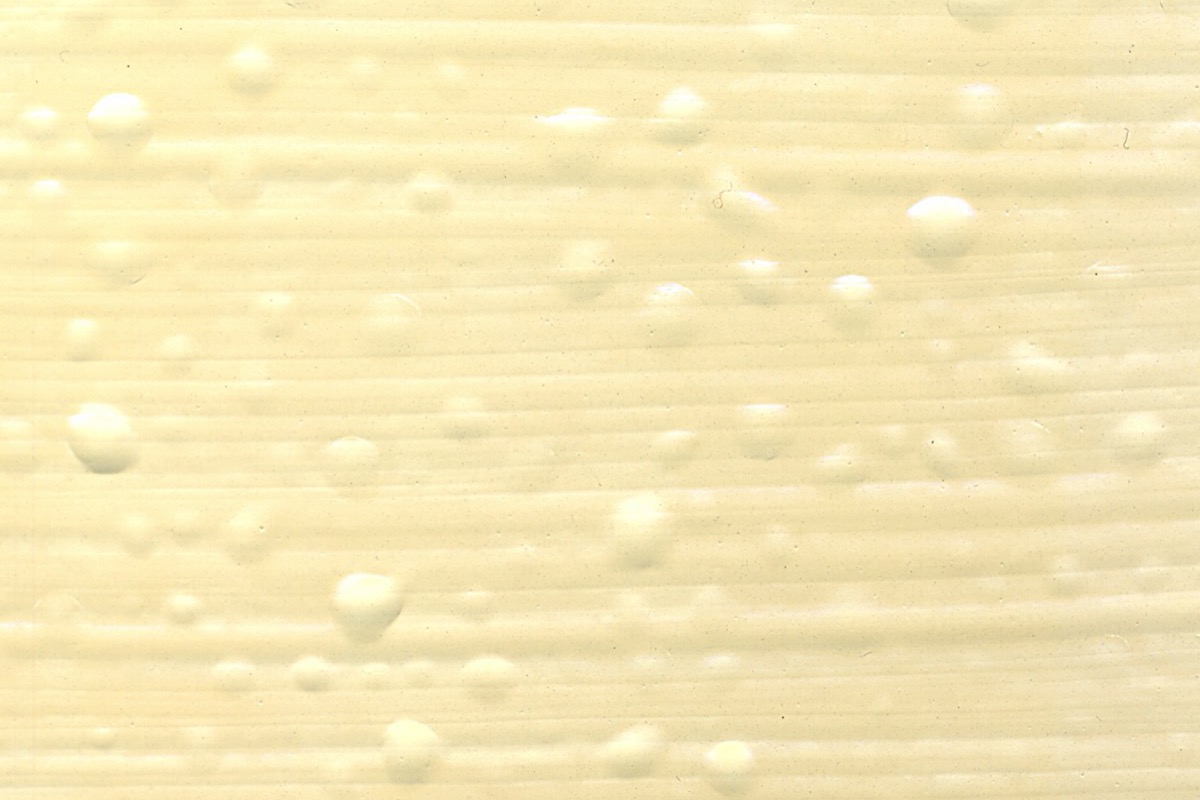
Epoxy floor bubbles that appear during or within hours of application are almost always trapped air — outgassing from a porous slab, or air whipped in during mixing. Blisters that appear weeks or months later, are dome-shaped, and release liquid when pierced are osmotic. The pierce test is the fastest way to separate the two, and it decides the remedy: application bubbles are a workmanship and priming problem, while osmotic blistering points to moisture reaching the underside of the film.
Two failures that look the same and are not
Walk onto a floor with raised circular defects and the temptation is to call them all 'bubbles' and reach for a grinder. That is a mistake, because two entirely unrelated mechanisms produce a similar-looking floor. One is a defect built into the coating on the day it was laid. The other is a slow, ongoing process driven by moisture in the concrete, and it will return no matter how well you patch the surface.
The separating variable is time. Air-related bubbles are present as the film gels and are fully visible within hours. Osmotic blisters develop after the coating has cured, often weeks or months into service, sometimes after a wet season or a change in floor washdown regime. The second separating variable is contents. Cut an air bubble open and you find a dry, empty void. Cut an osmotic blister open and liquid comes out.
Before any remediation is priced, the failure should be classified. Piercing a representative sample of blisters with a sharp blade takes minutes and costs nothing, and it is the single most informative test available on site. Everything that follows — whether you re-prime and recoat, or whether you have to investigate the slab and its damp-proof membrane — depends on the answer.
| Attribute | Application bubbles (entrapped air) | Osmotic blisters |
|---|---|---|
| When they appear | During application, or within hours as the film gels and cures | Weeks to months after cure, often seasonally or after washdown changes |
| Contents when pierced | Dry, empty void; no liquid | Liquid, sometimes under pressure, sometimes with a slight taste or residue of dissolved salts |
| Shape and pattern | Small, often clustered over porous or blowhole-rich areas, or over roller marks | Discrete, dome-shaped, spread across the floor, sometimes clustered over damp zones |
| Typical cause | Slab outgassing on a rising temperature cycle, over-vigorous mixing, solvent entrapment, unprimed porous concrete | Moisture below the film plus soluble material at the bond line, drawing water through the cured coating |
| Typical remedy | Correct prep, prime or seal the slab, mix and apply correctly, apply on a stable or falling slab temperature | Diagnose slab moisture first; surface repair alone does not address the driver |
Application bubbles: air, not water
Concrete is porous. The blowholes, capillaries and voids inside a slab hold air, and air expands when it warms. If a coating is applied to a slab whose temperature is rising — a morning pour of resin onto a slab that then warms through the afternoon, or a slab warmed by the sun through an open roller shutter — the air in those voids expands and pushes up through the wet film. It arrives at the surface as a bubble, and if the film has already begun to gel, the bubble cannot heal over. This is outgassing, and it is a scheduling and priming problem rather than a product problem.
The other sources of entrapped air are simpler. Mixing too fast, or with the wrong blade, whips air into the resin, and a high-viscosity system will not release it before gelling. Solvent-borne coatings applied too thickly, or over a coat that has skinned but not cured, can trap solvent that later boils out through the film. In every one of these cases the defect is a dry void. There is nothing behind it and nothing feeding it.
The controls are correspondingly practical. Prepare mechanically so blowholes are fully exposed rather than bridged over, prime the substrate so the pore network is sealed before the build coat goes down, mix at a controlled speed and let the mix stand briefly, and time the application so the slab temperature is stable or falling. Sparco's TDS for the Epoxy Bonding Primer #100 gives a minimum substrate temperature of 5 °C and a curing range of +10 °C to +35 °C at a coverage of 6–8 m²/kg per coat; on a highly absorbent slab a water-based system such as Sparcofloor WBE 400 is formulated for that condition. Surface preparation itself is covered in detail in our surface-preparation article and is not repeated here.
Osmotic blistering: the widely accepted mechanism
Osmotic blistering is the explanation the coatings literature generally accepts for liquid-filled blisters under a cured film, and it is worth stating plainly that this is a mechanism described in the wider industry rather than something Sparco has independently tested. It requires three things to coincide: moisture or water vapour beneath the coating, something soluble at or near the bond line, and a cured film that behaves as a semi-permeable membrane.
Soluble material at the bond line may be residual salts in the concrete, alkalis released by continuing hydration, contamination left behind by inadequate cleaning, or unreacted material from a poorly mixed primer. Moisture reaching that layer dissolves it and creates a concentrated solution. Water on the dilute side of the membrane — the moisture in the slab — is then drawn through the coating film toward the concentrated solution. Because the film is bonded down at the edges, the volume of water arriving has nowhere to go, and hydrostatic pressure builds beneath it. When that pressure exceeds the adhesion of the film, the coating lifts and a dome forms.
This explains the two diagnostic signatures. It explains why the blister is filled with liquid, because the liquid is what drove the failure. And it explains why the failure is progressive: as long as moisture is available below the film and soluble material is present, the gradient persists and new blisters keep forming. Grinding the domes off and recoating removes the symptom and leaves the driver untouched.
-
Coating film (semi-permeable)
Passes water molecules but retains dissolved salts beneath
-
Blister cavity containing liquid
Hydrostatic pressure here lifts and debonds the film
-
Bond line with soluble salts
Dissolved material creates the concentration gradient driving osmosis
-
Moist concrete
Supplies the water on the dilute side of the membrane
-
Ground moisture or absent DPM
Continuously replenishes slab moisture, so blistering keeps recurring
The coating film acts as a semi-permeable membrane; water is drawn toward the concentrated solution at the bond line and lifts the film.
Why the Singapore slab is a difficult starting point
Three regional conditions stack against a coating here. Ambient humidity is high all year, so a slab has little seasonal opportunity to dry. Slab temperatures stay warm year-round, which keeps vapour pressure inside the concrete elevated and keeps outgassing lively during application. And a great deal of industrial floor area in Singapore is slab-on-grade, where a damp-proof membrane may have been omitted, punctured during construction, or specified but never verified.
The third point matters most for osmosis. A slab-on-grade without a functioning damp-proof membrane is not a closed system. It is a wick with the water table below it. Moisture is not a fixed quantity that eventually dries out; it is continuously resupplied. That is exactly the condition under which osmotic blistering recurs after the floor has been ground, patched and recoated.
A separate case is the young slab. New construction moisture leaves concrete slowly, and slabs coated to meet a handover date routinely still hold construction water deep in the section. The surface can look and feel dry while the mid-depth of the slab remains well above what any resin system will tolerate. Sparco's TDS for both the Epoxy Bonding Primer #100 and Sparcofloor WBE 400 caps the maximum permissible concrete substrate moisture content at 5%, and that figure refers to the substrate, not to the appearance of the surface.
Diagnose before you remediate: a pre-remediation checklist
Two tests establish whether the slab is the problem. ASTM F2170, Standard Test Method for Determining Relative Humidity in Concrete Floor Slabs Using in situ Probes, measures internal slab relative humidity using probes set at 40% of slab depth where the slab dries from one side. ASTM F1869, Standard Test Method for Measuring Moisture Vapor Emission Rate of Concrete Subfloor Using Anhydrous Calcium Chloride, measures moisture vapour emission rate at the surface. Both are test methods; the acceptance limit is set by the coating manufacturer or the project specification, not by the standard itself. Our moisture-testing article covers procedure, conditioning and interpretation — this article deliberately stops at naming them.
Everything else on the checklist below can be done in an afternoon by a competent person with a blade, a torch, a set of construction drawings and access to the maintenance log. Run it before you accept a remediation quotation, because the two remediation paths — surface rework versus moisture investigation — differ by an order of magnitude in scope.
- Pierce at least five representative blisters across the floor. Record whether each releases liquid or is a dry void.
- Date the defect. Establish from site records whether the bubbles were present at handover or appeared later.
- Map the blistered areas onto a plan. Note whether they cluster near loading bays, drains, external walls or wash-down zones.
- Establish whether a damp-proof membrane was specified, installed, and verified. Check drawings, not assumptions.
- Establish slab age and whether the slab was ever allowed a drying period before coating.
- Check whether the coating was applied on a rising or falling slab temperature, and whether a primer was used.
- Commission ASTM F2170 in-situ RH probes and, where surface emission data is wanted, ASTM F1869 calcium chloride tests.
- Take pull-off samples of intact areas using ASTM D7234 to establish where the failure plane sits in sound regions.
- Confirm the failure mode in writing before any grinding starts.
Common mistakes
The most expensive mistake is also the most common: sanding the blisters flat and recoating. If the blisters are liquid-filled, the moisture and the soluble material are still there, the new film is still semi-permeable, and the floor will blister again — usually faster, because the film is now thinner over the repaired zones. The repair looks successful for a season and then fails in the same locations.
The second is coating a slab on a rising temperature cycle. Applying resin in the early morning onto a slab that will warm through the day is an invitation to outgassing. Where the schedule allows, apply as the slab temperature is stable or falling. The third is treating a missing damp-proof membrane as a paperwork problem. If there is no functioning DPM under a slab-on-grade, the moisture supply is permanent, and no coating specification should be written as though the slab will eventually dry.
The fourth is the simplest to make. A dry-looking surface is not a dry slab. Concrete dries from the surface inward, so the top few millimetres reach equilibrium with the air in a warehouse long before the mid-depth does. Touch and appearance tell you nothing about moisture at 40% of slab depth. Nothing Sparco supplies should be presented as a damp-proof membrane or as a cure for osmotic blistering; where moisture is being actively resupplied from below, that is a construction issue and needs to be addressed as one.
When to use this system
- Blisters have appeared on a coated floor and the cause has not been established
- A recoated floor has blistered again in the same locations
- A slab-on-grade floor is being specified and DPM status is unknown
- A new slab is being coated to meet a handover date
Where it is commonly used
- Warehouse and distribution slabs on grade
- Ground-floor production areas in older industrial estates
- Basement and semi-basement plant rooms
- Loading bays and wash-down areas with recurring moisture
Related Sparco products
Recommended TDS downloads
Browse the TDS Download Centre →Related market segments
Manufacturing & Warehousing
Production floors and warehouses take forklift traffic, impact, spills and around-the-clock operations. Sparco's full flooring range — from bonding primers and repair mortars to self-smoothing epoxies and polyurethane topcoats — keeps industrial floors serviceable with minimal downtime.
Food & Beverages
Food and beverage plants combine thermal shock, frequent washdowns and hygiene requirements that ordinary floors cannot sustain. Sparco's solvent-free epoxy systems and polyurethane screeds create seamless, chemical-resistant surfaces suited to wet process and production areas.
Related solutions & guides
Frequently asked questions
How can I tell if my epoxy floor bubbles are osmotic blisters or just trapped air?
Pierce a blister with a sharp blade. If liquid comes out, the blister is osmotic and the driver is moisture beneath the film; if the void is dry and empty, it is entrapped air from application. Timing corroborates it — air bubbles appear during or within hours of curing, while osmotic blisters appear weeks or months later.
Why did my epoxy floor blister months after it was installed?
A delay of weeks to months between installation and blistering points toward osmosis rather than application defects. Moisture in the slab combines with soluble material at the bond line, the cured coating behaves as a semi-permeable membrane, and water is drawn through it until hydrostatic pressure lifts the film. This is the mechanism widely accepted in the coatings industry for liquid-filled blisters.
Can I just grind off the blisters and apply another coat?
Not if the blisters contain liquid. Grinding removes the visible defect but leaves the moisture supply and the soluble material at the bond line intact, so blistering recurs, often in the same locations. Surface rework is only an appropriate response when the defect has been confirmed as dry, entrapped air.
Does high humidity in Singapore cause epoxy floors to blister?
Ambient humidity affects application conditions and slows the drying of a slab, but it is not the direct driver of osmotic blistering. The driver is liquid moisture reaching the underside of the film, which in Singapore usually means a slab-on-grade without a functioning damp-proof membrane, or a young slab still releasing construction moisture.
What slab moisture content does Sparco require before coating?
Sparco's TDS for both the Epoxy Bonding Primer #100 and Sparcofloor WBE 400 caps maximum permissible concrete substrate moisture content at 5%. That is a substrate value, not a surface observation, so it should be established by measurement rather than by touch. Water-based epoxies such as Sparcofloor WBE 400 and WBE 410 are formulated for highly absorbent substrates, but no coating is a substitute for a damp-proof membrane.
Which tests should I run on a slab before recoating a blistered floor?
ASTM F2170 in-situ relative humidity probes measure moisture inside the slab, and ASTM F1869 calcium chloride testing measures the moisture vapour emission rate at the surface. Both are test methods only — the acceptance limit comes from the coating manufacturer's data sheet or the project specification. Pull-off testing to ASTM D7234 on intact areas is useful for locating the failure plane.
Related guides
Related project references
Anonymised references from real Sparco projects show how these systems are applied on comparable sites.
Browse project references →Values referenced in this guide come from the products' Technical Data Sheets. Final specification depends on substrate, traffic, chemical exposure and shutdown window — confirm the complete build-up with our technical team.