
Problem Solving · 10 min read · Updated 2026-07-08
Dusty Concrete Floor Solution for Warehouse and Factory Slabs
Answer summary
A dusting concrete floor is abrading away because the top few millimetres of the slab are weak — usually a laitance layer left by bleed water and over-trowelling, or a surface that dried before the cement had hydrated. The solution is to remove the weak layer mechanically, then either densify the exposed concrete or apply a coating that provides a wear layer. Sealing or painting over laitance does not fix the problem; the coating simply debonds along with the weak layer it was applied to.
What dusting actually is
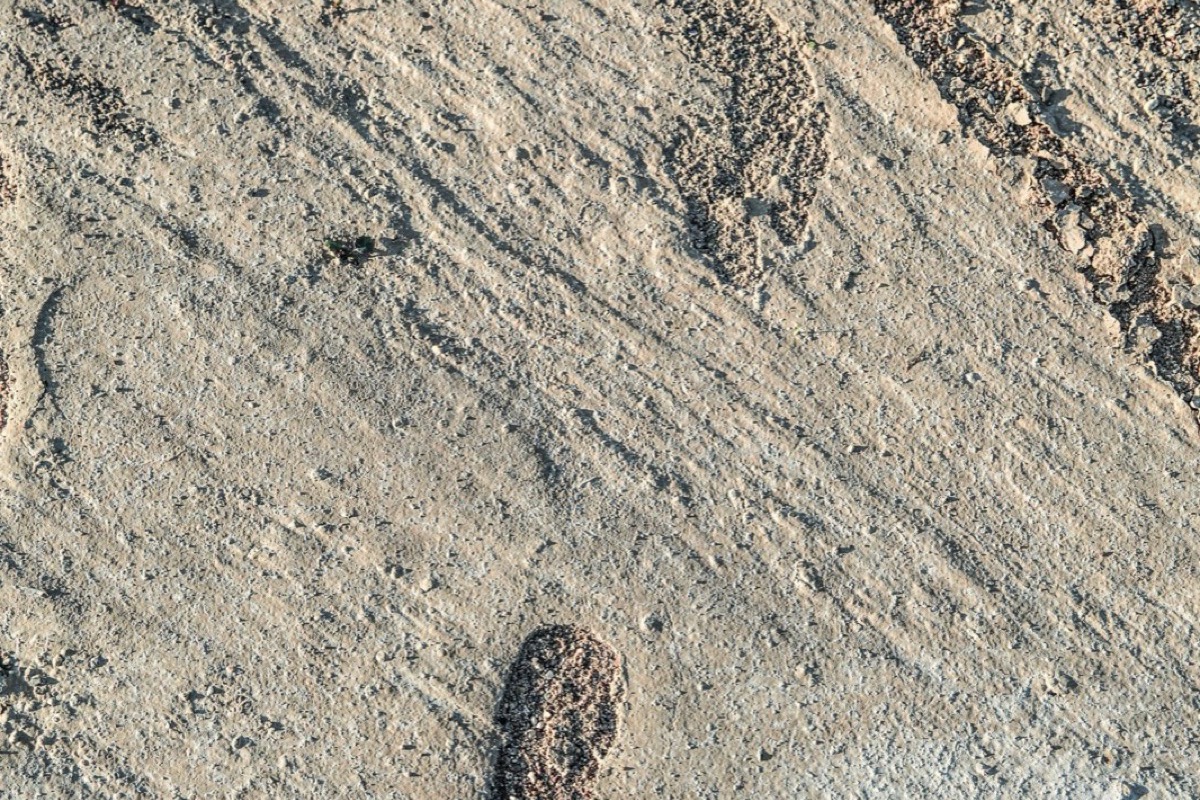
Fine grey powder that reappears an hour after sweeping is not dirt from outside. It is the slab itself. Dusting is the progressive abrasion of the wearing surface of a concrete floor, and it happens because the top few millimetres are materially weaker than the concrete below them. Forklift tyres, pallet trucks and foot traffic grind that weak layer into powder, and the powder migrates onto racking, stock, packaging and machinery.
The most frequent cause is laitance: a thin, fines-rich, cement-and-water-heavy layer brought to the surface by bleed water and then worked into the surface by over-trowelling, or by adding water to the surface to make finishing easier. Laitance has a very low binder-to-fines ratio, so it never develops meaningful strength. Inadequate curing produces a similar result by a different route — if the surface dries before the cement at the surface has hydrated, the hydration reaction stops and the top layer is left under-strength regardless of the mix design.
Two further causes are worth knowing. Carbonation of a green slab occurs where fuel-burning equipment — propane forklifts, unflued heaters, generators — runs in a poorly ventilated space while the concrete is still curing, and the carbon dioxide reacts with the fresh surface to leave a soft, chalky skin. Freeze-thaw and chemical attack also weaken surfaces, though freeze-thaw is not a Singapore concern. Finally there is the ordinary case: a sound but untreated, unsealed slab that has simply never been given a wear layer, slowly abrading under forklift traffic.
-
Loose surface dust
The visible symptom; sweeping removes it and it returns
-
Weak laitance layer
Low-strength fines; any coating applied here debonds with it
-
Sound concrete below
The real substrate; must be exposed mechanically before coating
A coating bonds to whatever it is applied to. If that is laitance, the coating debonds when the laitance does.
What dusting costs a facility
In food, pharmaceutical and electronics facilities, airborne concrete dust is a contamination pathway. It settles on open product, on packaging surfaces, on assembly benches and inside enclosures, and once it is in the air it is carried by every forklift movement and every door opening. Facilities that hold hygiene or cleanliness certifications frequently find that a dusting slab is the finding that will not go away, because cleaning treats the symptom on a cycle shorter than the rate at which the surface regenerates dust.
The mechanical cost is less visible and often larger. Concrete dust is abrasive. It is drawn into forklift wheel bearings, mast rollers, conveyor bearings and machine slideways, where it shortens service life and raises maintenance frequency. Add the direct cost of continuous sweeping, scrubbing and filter changes, and a dusting floor becomes a permanent line item rather than a one-off defect.
There is a third cost that only appears when the facility finally decides to coat the floor. A dusting surface is, by definition, a bond-inhibiting layer. Any resin applied over it bonds to the laitance rather than to the slab, and the whole system delaminates with the weak layer beneath it. That means the weak layer has to be removed before any coating goes down, without exception. Our surface-preparation article covers the mechanical methods and the resulting concrete surface profile in detail.
Comparing the remediation options
There is no single right answer, and the honest comparison is that these options do different jobs. Mechanical grinding removes the weak layer and exposes sound concrete, but it leaves you with an open, uncoated surface that will eventually abrade again unless something is done to it. A silicate densifier reacts with free lime in the concrete to harden and reduce dusting at the surface, but it adds no thickness and no wear layer — it improves the concrete you have rather than covering it. A coating adds a wear layer, but it demands full preparation first and it introduces downtime.
The decision usually turns on three questions. What is the traffic — is it foot and pallet trucks, or loaded counterbalance forklifts turning on the spot? Is there chemical exposure, and if so what and how often? And how long can the area be out of service? A facility that can only shut a bay for a weekend will make a different choice from one with a two-week annual shutdown. Selection depends on traffic, chemical exposure, moisture and downtime, and should be confirmed through technical review of the actual slab.
Sparco's range covers the sealing and coating routes. Sparcofloor WBE 400 is a water-based two-component epoxy suitable for highly absorbent substrates. Sparco Epoxy Bonding Primer #100 is commonly used to prime highly absorbent concrete at a coverage of 6–8 m²/kg per coat. Sparcofloor #102 is a two-part solvent-free high-solids epoxy roller coating where a tougher film is wanted. Sparco's listed range does not include a silicate densifier, so where a densifier is the right answer it is discussed here generically.
| Option | What it does | Dust suppression | Abrasion resistance | Chemical resistance | Typical downtime | When it is the right answer |
|---|---|---|---|---|---|---|
| Mechanical grinding + seal | Removes laitance and dust-generating fines, exposes sound concrete, then seals the open pore structure | Good, provided the weak layer is fully removed | Limited — the wear surface is still the concrete itself | Low | Short; grinding is dry and the seal is thin | Light traffic, budget-constrained, or as the first stage of any coating works |
| Silicate densifier | Reacts with free lime to harden the surface chemically; adds no film thickness | Good on sound concrete; poor if laitance remains | Improves the concrete but adds no wear layer | Low | Short; often same-day return to traffic | Sound but soft slabs, hygiene areas where a film is unwanted, no chemical exposure |
| Epoxy sealer / thin coating | Adds a thin bonded resin film over prepared concrete | Very good while the film is intact | Moderate; thin films wear through in forklift aisles | Moderate, depending on the exposure | Moderate; prep plus cure | General warehousing, cleanability wanted, moderate traffic |
| High-build epoxy or PU system | Adds a substantial bonded wear layer with a designed thickness | Very good | High | High, depending on system and exposure | Longest; full prep, multiple coats, full cure | Heavy forklift traffic, chemical exposure, production and process areas |
Preparing the slab: what the data sheets actually require
The requirement is not negotiable and it is written into the data sheets. Sparco's TDS surface-preparation clause states that the substrate must be dry, sound, clean and free from oil, grease, loose material and other bond-inhibiting materials; that concrete must be prepared mechanically by ball blasting, milling or diamond grinding; and that weak concrete must be removed and blowholes and voids fully exposed. A dusting surface is weak concrete, and the clause says what to do with it.
Two numbers follow from that. Sparco's TDS for both the Epoxy Bonding Primer #100 and Sparcofloor WBE 400 sets a minimum pull-off strength of the prepared substrate of 1.5 N/mm². That is a value measured after preparation, and it is the practical proof that the weak layer has actually been removed rather than merely swept. Sparcofloor WBE 400 additionally states a minimum concrete compressive strength of 25.0 N/mm² — a badly under-strength slab is not a coating problem, it is a structural one.
Where grinding exposes voids, blowholes or spalled areas, they need filling before the coating is applied. Sparco Epoxy Mortar is a three-pack non-shrink steel-trowel-applied mortar intended for concrete floor repair, patching and reinstatement, with a touch-dry time of four hours at 30 °C. The concrete surface profile achieved by each preparation method, and the profile each coating type commonly wants, is set out in our surface-preparation article.
Checklist before you specify anything
Most dusting-floor specifications go wrong before a single litre of resin is ordered, because the slab was never characterised. Work through the following on site with a torch, a knife, a bucket of water and access to the facility's traffic and cleaning records. It takes an hour and it will change the specification.
- Scratch the surface hard with a coin or knife. If it powders easily, you have a weak layer, not a clean floor.
- Sweep a square metre, wait an hour under normal traffic, and see whether dust returns. Confirm the slab is the source.
- Take a small core or grind a test patch to establish how deep the weak layer runs before sound concrete begins.
- Establish the slab's age, mix and curing history from records where available; look for evidence of over-trowelling or added surface water.
- Check for fuel-burning equipment running in poorly ventilated areas during the slab's early life, which points to carbonation.
- Map the traffic. Identify forklift aisles, turning points, racking runs and pedestrian routes; these will dictate the wear layer.
- Identify chemical exposure by substance, concentration and frequency, not by the general phrase 'chemicals'.
- Confirm slab moisture condition before committing to a coating; Sparco's TDS caps permissible substrate moisture content at 5%.
- Establish the realistic shutdown window per bay, and whether it can be phased.
- Specify prepared-substrate pull-off testing so the removal of the weak layer is verified, not assumed.
Common mistakes
Painting over a dusting floor is the classic. The coating goes down onto the laitance, bonds to it perfectly well, and then the laitance debonds from the sound concrete beneath it. Sheets of coating lift under the first loaded forklift and the facility concludes that the coating was defective. The coating was fine; it was bonded to a weak layer, and the layer failed.
Sweeping and sealing without removing laitance is the same mistake in a gentler form. A seal applied over a soft surface may reduce the dust for a period, because it binds the loose fines it can reach. It does not restore strength to the layer beneath, and under abrasive traffic the sealed skin wears through and the dusting resumes. Neither vacuuming nor an aggressive wash removes laitance; only mechanical preparation does.
The third mistake is scale. A domestic garage sealer, applied at domestic film thickness, has no useful life in a counterbalance forklift aisle. The traffic loading in a warehouse turning bay is a different problem from a car parked on a driveway, and the film thickness, the resin chemistry and the preparation all have to reflect that. Selecting between a densifier, a thin epoxy sealer and a high-build epoxy or PU system depends on traffic, chemical exposure, moisture and downtime, and should be confirmed through technical review.
When to use this system
- Dust reappears on swept floors within hours of cleaning
- Airborne dust is contaminating product, packaging or equipment
- A coating is being planned over an untreated, unsealed slab
- A previous coating has lifted in sheets with grey powder underneath
Where it is commonly used
- Warehouse racking aisles and forklift turning bays
- Factory production and assembly floors
- Food, pharmaceutical and electronics facilities with contamination limits
- Ageing industrial estate slabs that were never coated
Related Sparco products
Recommended TDS downloads
Browse the TDS Download Centre →Related market segments
Manufacturing & Warehousing
Production floors and warehouses take forklift traffic, impact, spills and around-the-clock operations. Sparco's full flooring range — from bonding primers and repair mortars to self-smoothing epoxies and polyurethane topcoats — keeps industrial floors serviceable with minimal downtime.
Electronics
Electronics manufacturing requires floors that control electrostatic discharge and stay dimensionally stable under equipment loads. Sparco's ElectroShield conductive epoxy system, supported by epoxy primers and screeds, protects sensitive components and clean production environments.
Related solutions & guides
Frequently asked questions
Why does my warehouse concrete floor keep producing dust after sweeping?
Because the dust is being generated by the slab, not deposited on it. The top few millimetres are a weak, fines-rich layer — usually laitance — that abrades into powder under forklift and foot traffic, so sweeping simply exposes a fresh surface to abrade. The dusting only stops when the weak layer is mechanically removed and either densified or covered with a wear layer.
What is laitance and how do I know if my floor has it?
Laitance is a thin, weak layer of cement fines and water brought to the surface of a slab by bleed water and worked in by over-trowelling or by adding water during finishing. Scratch the surface firmly with a coin or knife; if it powders easily and exposes denser concrete a millimetre or two down, laitance is present. It has to be removed mechanically before any coating is applied.
Will a concrete sealer stop my factory floor from dusting?
Only if the weak layer has been removed first. A sealer applied over laitance binds the loose fines it can reach and reduces dust for a period, but it does not restore strength to the layer beneath, and under abrasive traffic the sealed skin wears through and dusting resumes. Sealing is a step after mechanical preparation, not a substitute for it.
What is the difference between a densifier and an epoxy coating for a dusting floor?
A silicate densifier reacts chemically with free lime in the concrete to harden the surface, but it adds no thickness and therefore no wear layer — the concrete remains the wearing surface. An epoxy coating adds a bonded resin wear layer with a designed thickness, giving higher abrasion and chemical resistance, but it requires full mechanical preparation and a longer shutdown. Sparco's listed range does not include a densifier product.
How much surface preparation does Sparco's data sheet require before coating a dusting slab?
Sparco's TDS requires that the substrate be dry, sound, clean and free from oil, grease, loose material and other bond-inhibiting materials, that concrete be prepared mechanically by ball blasting, milling or diamond grinding, and that weak concrete be removed with blowholes and voids fully exposed. It also sets a minimum prepared-substrate pull-off strength of 1.5 N/mm², and Sparcofloor WBE 400 states a minimum concrete compressive strength of 25.0 N/mm².
Is concrete dust a real contamination risk in food and electronics facilities?
Yes. Fine concrete dust becomes airborne with every forklift movement and settles on open product, packaging, assembly benches and inside equipment enclosures. It is also abrasive, so it shortens the service life of forklift and machinery bearings, which makes a dusting slab both a hygiene finding and a maintenance cost.
Related guides
12 min read
Why Industrial Floor Coatings Fail: A Diagnostic Guide
Read guide →
16 min read
Concrete Surface Preparation for Coating: CSP Profile and Methods
Read guide →
5 min read
Why Solvent-Free Epoxy Flooring Is Used in Industrial Facilities
Read guide →
7 min read
Concrete hardener vs epoxy coating: which does a warehouse floor need?
Read guide →
Related project references
Anonymised references from real Sparco projects show how these systems are applied on comparable sites.
Browse project references →Values referenced in this guide come from the products' Technical Data Sheets. Final specification depends on substrate, traffic, chemical exposure and shutdown window — confirm the complete build-up with our technical team.