
ODM & Manufacturing · 5 min read · Updated 2026-07-07
ODM Paint Manufacturing: How Brands Develop Custom Coatings
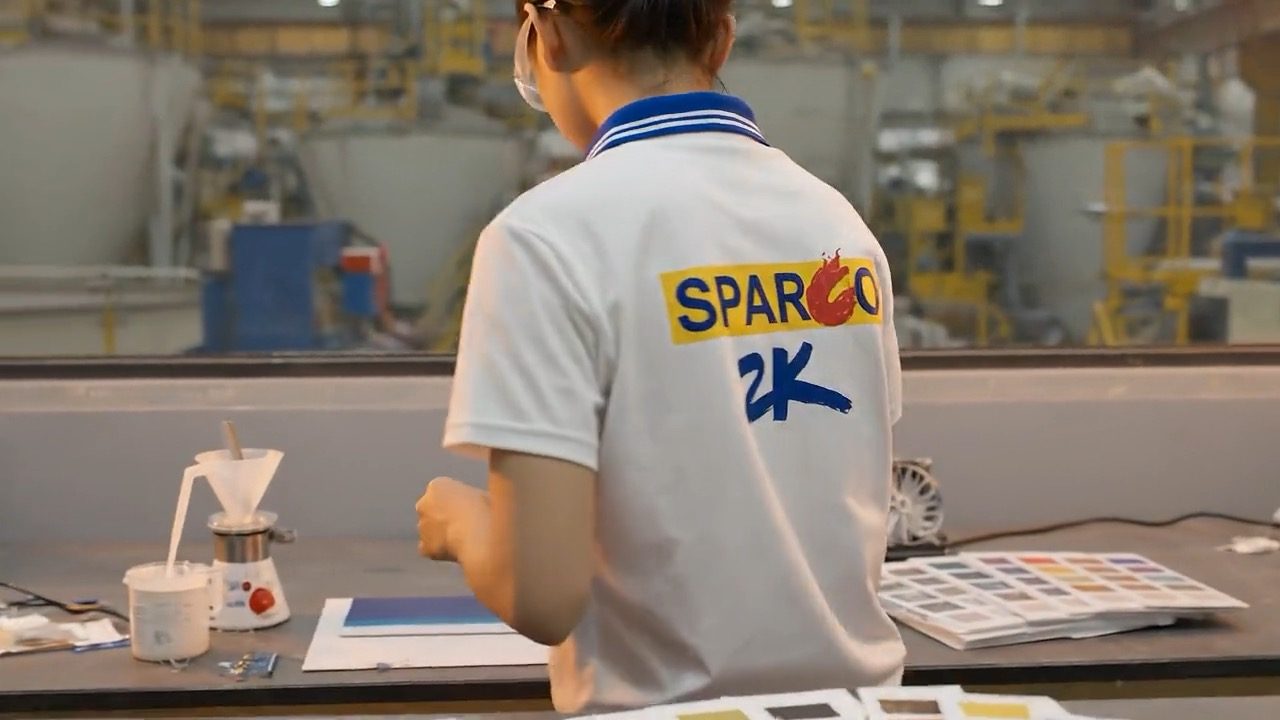
Answer summary
ODM (Original Design Manufacture) paint manufacturing lets a brand sell coatings without owning a factory: the manufacturer formulates, samples, produces and quality-controls the product under the brand's label. Projects follow a staged path — brief, laboratory formulation, sampling and approval, then production — with minimum order quantities, timelines and confidentiality agreed per project. Sparco has manufactured as an ODM in Singapore since 1984.
Private label vs custom formulation
Two routes lead to a branded coating. Private label takes an existing, proven formulation and produces it under your brand — fastest to market, lowest development cost. Custom formulation develops a product to your specification — a particular finish, performance profile, application method or regulatory requirement — which takes longer but yields a product genuinely your own.
Many brands combine the two: launch on private-label versions of established products, then commission custom development where the market demands differentiation.
How an ODM project typically runs
Commercial terms — minimum order quantities, lead times, exclusivity and confidentiality — are agreed per project, and serious manufacturers put quality management behind the process: Sparco's facility operates under ISO 9001:2015, ISO 14001:2015 and ISO 45001:2018 certified management systems.
- Brief — intended use, target market, performance requirements, packaging and volumes
- Laboratory formulation — the manufacturer's chemists develop or adapt the formulation
- Sampling — trial batches for the brand to test and approve, iterating as needed
- Production — manufactured under the agreed specification and quality-control plan
- Supply — packaging, labelling and delivery under the brand's identity
What brand owners should prepare
The clearer the brief, the faster the project: the application and substrate the product must serve, the performance expectations (and any standards it must meet), the target market and climate, packaging formats, expected annual volumes, and any benchmark product you want matched or improved on.
With that in hand, an ODM manufacturer can quote development scope, sampling timeline and minimum order quantities realistically — and you can compare partners on substance rather than promises.
When to use this system
- Launching a coating brand without building a factory
- Extending an existing brand into paints and coatings
- Replacing an imported product with regional manufacture
- Developing a differentiated formulation your market lacks
Where it is commonly used
- Paint and coating brand owners and distributors
- Hardware and building-material retail brands
- Industrial OEMs needing a branded consumable
- Regional distributors localising supply
Related solutions & guides
Frequently asked questions
What is the difference between OEM and ODM in paint manufacturing?
In common usage, OEM production runs the customer's own formulation, while ODM includes design: the manufacturer develops or adapts the formulation and produces it under the customer's brand. Sparco operates as an ODM — formulation, sampling, production and quality control.
What minimum order quantities apply?
MOQs depend on the product type, packaging and production batch sizes, and are agreed per project during the brief and quotation stage rather than from a fixed list.
Who owns the formulation in an ODM project?
Ownership and exclusivity are commercial terms agreed per project — from manufacturer-owned formulations supplied under private label through to exclusive custom developments. Confidentiality terms are normally agreed before development starts.
Can Sparco match an existing paint or colour for my brand?
Colour matching and reformulating to a target are part of the ODM development process; scope and feasibility are agreed per project. Share your reference and requirements and the team will advise.
How long does an ODM coating project take?
Timelines depend on the product, the amount of formulation or matching work and the testing required, and are agreed per project rather than published as a fixed lead time. The team scopes this with you from the brief.
Related guides
Values referenced in this guide come from the products' Technical Data Sheets. Final specification depends on substrate, traffic, chemical exposure and shutdown window — confirm the complete build-up with our technical team.