
Product Selection · 6 min read · Updated 2026-07-07
Epoxy vs Polyurethane Flooring: Which System Should You Use?
Answer summary
Epoxy flooring is usually selected for seamless, chemical- and abrasion-resistant industrial floors with high mechanical strength, while polyurethane systems are often chosen where UV stability, flexibility or a non-yellowing finish is important. Many floors use both: an epoxy body coat for build and strength, finished with an aliphatic polyurethane topcoat.
What each system is
Epoxy floor systems are two-component thermoset resins that cure into a hard, seamless film with strong adhesion to prepared concrete. They range from roller-applied coatings such as Sparcofloor #102 to self-smoothing, solvent-free systems such as Sparcofloor SL 200, which is typically applied at around 1.6–2.0 kg/m² as a self-smoothing wearing layer.
Polyurethane (PU) floor coatings are valued for abrasion resistance, flexibility and colour retention. Aliphatic grades — such as the solvent-based Sparcofloor PU 41 or the water-based Sparcothane 341W — are formulated for non-yellowing performance under UV, which is why PU is the usual choice for exposed decks and colour-critical surfaces.
Epoxy vs PU at a glance
The two chemistries play different roles rather than competing head-to-head. The comparison below reflects how they are typically specified:
| Epoxy | Polyurethane (PU) | |
|---|---|---|
| Best for | Floor body, high build, heavy chemical exposure | Topcoats, UV-exposed areas, colour-critical finishes |
| Key strengths | Hardness, mechanical strength, chemical resistance | Abrasion resistance, flexibility, non-yellowing gloss |
| UV exposure | May discolour outdoors | Aliphatic grades retain colour and gloss |
| Typical forms | Solvent-free self-smoothing, roller coats, water-based | Solvent-based or water-based (PUD) topcoats, screeds |
Why many floors use both
A common industrial build-up is an epoxy primer and body coat for adhesion, build and chemical resistance, finished with an aliphatic PU topcoat that takes the traffic, sunlight and cleaning. On an exposed car park deck, for example, a two-component PU floor coating such as Sparcofloor 343 is commonly specified over the epoxy system because it retains its colour and gloss under strong ultraviolet exposure.
The decision therefore is rarely "epoxy or PU" for the whole floor — it is which chemistry belongs in which layer, which depends on substrate, traffic, chemical exposure and whether the floor sees sunlight.
How to decide
Four questions usually settle the specification: Is the floor exposed to UV (aliphatic PU matters)? What chemicals and loads must the body of the floor resist (epoxy build)? Is the space occupied during application (water-based systems apply with low odour)? And what shutdown window is available for curing?
If you are comparing systems for a specific facility, our technical team can review the substrate and exposure and recommend a complete build-up rather than a single product.
When to use this system
- Epoxy body systems: seamless industrial floors needing chemical and mechanical resistance
- Aliphatic PU topcoats: exposed decks, ramps and colour-coded zones
- Water-based PU (PUD): occupied buildings where low-odour application matters
- Combined epoxy + PU build-ups: exposed trafficked floors needing both strength and UV stability
Where it is commonly used
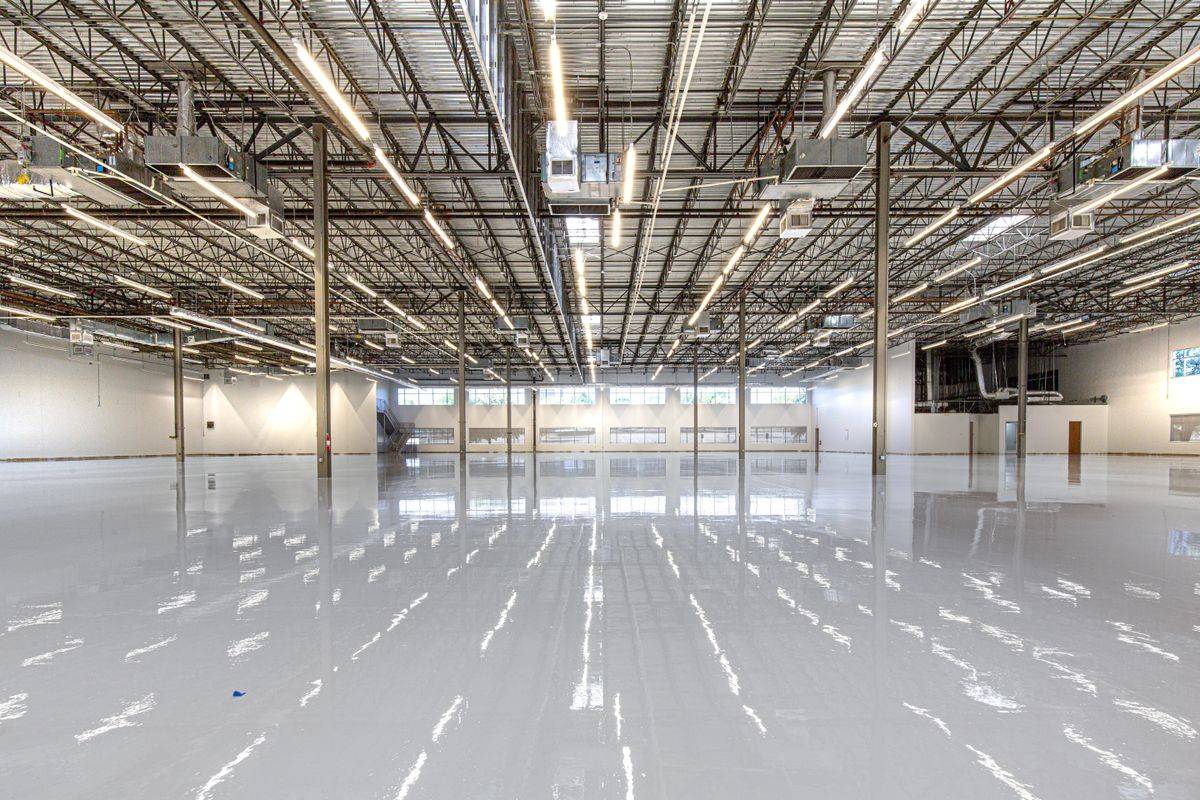
- Warehouses and manufacturing floors
- Car park decks and ramps
- Plant rooms, loading bays and workshops
- Colour-coded walkways and demarcation zones
Related Sparco products
Sparcofloor SL 200
Self-smoothing, solvent-free epoxy flooring
View product & TDS →
Sparcofloor #102
Solvent-free epoxy roller coating
View product & TDS →
Sparcofloor PU 41
Solvent-based aliphatic polyurethane coating (two-component)
View product & TDS →
Sparcothane 341W
Water-based aliphatic PUD coating (two-component)
View product & TDS →
Recommended TDS downloads
Browse the TDS Download Centre →Related market segments
Manufacturing & Warehousing
Production floors and warehouses take forklift traffic, impact, spills and around-the-clock operations. Sparco's full flooring range — from bonding primers and repair mortars to self-smoothing epoxies and polyurethane topcoats — keeps industrial floors serviceable with minimal downtime.
Car Park
Car park decks face abrasion from turning traffic, hot tyres and constant exposure to moisture and contaminants. Sparco's deck systems pair epoxy and water-based primers with hard-wearing epoxy roller coats, self-smoothing bodies and UV-stable polyurethane topcoats for ramps, decks and demarcation.
Related solutions & guides
Frequently asked questions
Is polyurethane flooring better than epoxy?
Neither is universally better — they do different jobs. Epoxy typically provides the floor's build, hardness and chemical resistance; polyurethane typically provides the abrasion-resistant, UV-stable wearing surface. Many specifications combine both in one build-up.
Does epoxy flooring yellow in sunlight?
Standard epoxy systems may discolour under prolonged UV exposure, which is why exposed areas are commonly finished with an aliphatic polyurethane topcoat formulated for non-yellowing colour and gloss retention.
Can I apply a PU topcoat directly to concrete?
PU wearing coats are normally applied over a primer or epoxy body coat that seals and bonds to the concrete. The complete build-up depends on substrate condition and traffic — confirm it with the manufacturer's technical team.
Can epoxy and polyurethane be used together in one floor?
Yes. A common build-up pairs an epoxy body coat, for chemical resistance and strength, with a polyurethane topcoat for UV stability, flexibility and colour retention. Sparco specifies which layers a given floor needs based on the environment.
Which lasts longer, epoxy or PU flooring?
Service life depends far more on substrate preparation, film build and how the floor is used than on the resin type alone. Both give long service when correctly specified — PU tends to cope better with thermal shock and UV, epoxy with abrasion and chemicals. Sparco does not publish fixed service-life figures.
Related guides
5 min read
Why Solvent-Free Epoxy Flooring Is Used in Industrial Facilities
Read guide →
5 min read
PU Screed Flooring for Washdown and Heavy-Duty Areas
Read guide →
6 min read
How to Read a Technical Data Sheet for Floor Coatings
Read guide →
14 min read
Repair, Recoat or Replace an Industrial Floor: A Decision Matrix
Read guide →
8 min read
How to choose warehouse flooring: a zone-by-zone decision framework
Read guide →
7 min read
PU waterproofing vs cementitious waterproofing: which chemistry to choose
Read guide →
Related project references
Anonymised references from real Sparco projects show how these systems are applied on comparable sites.
Browse project references →Values referenced in this guide come from the products' Technical Data Sheets. Final specification depends on substrate, traffic, chemical exposure and shutdown window — confirm the complete build-up with our technical team.