
Problem Solving · 12 min read · Updated 2026-07-08
Concrete Floor Crack Repair Before Epoxy Coating
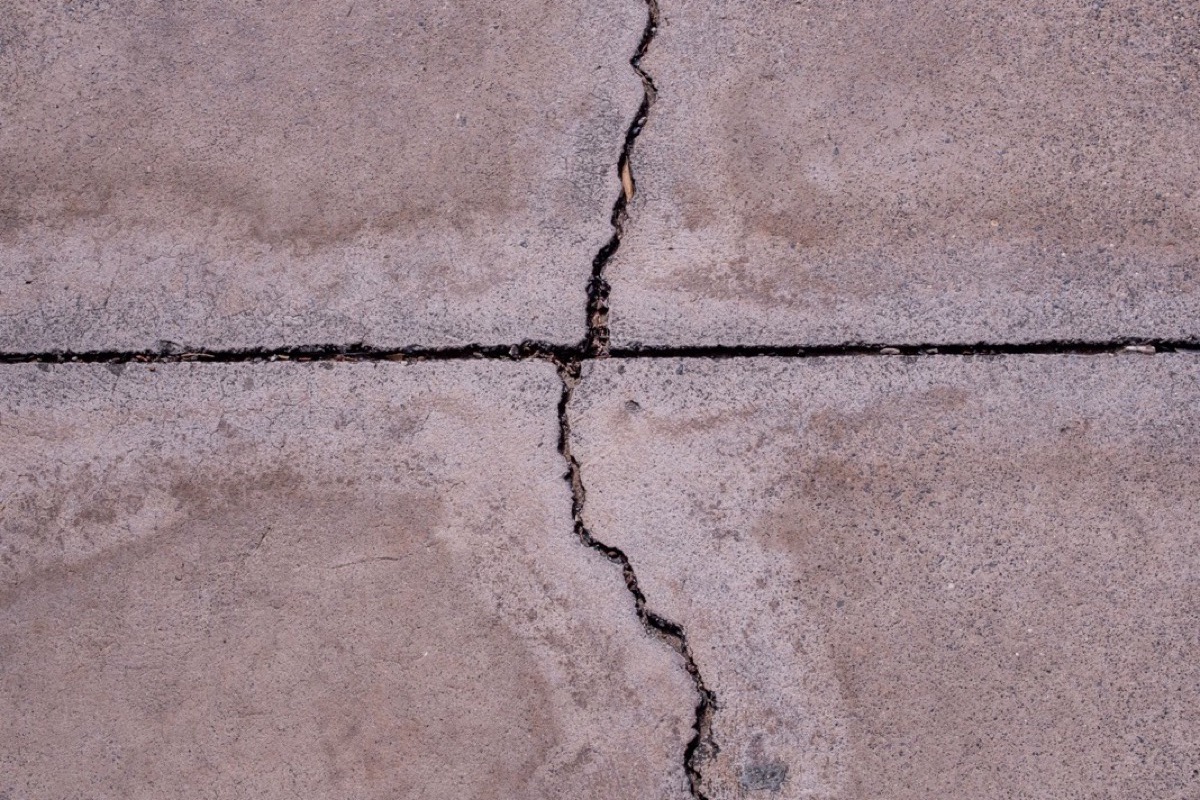
Answer summary
Before an industrial floor is coated, every crack has to be classified as static, moving, or a joint. A static crack can be routed out, cleaned and filled with a rigid epoxy repair mortar, then primed and coated over. A moving crack or a designed movement joint cannot: a rigid filler re-cracks and the coating telegraphs the crack through within weeks. A crack that is wet or passing water is a waterproofing problem, and no repair to it is valid until the water path is resolved.
Three things a crack can be, and why the difference decides everything
A crack in a concrete floor is not one problem with one repair. It is at least three different problems that happen to look alike from standing height. A static crack has finished moving. A moving crack has not. A joint was cut or formed deliberately and is supposed to move for the life of the slab. Fill all three with the same rigid material and two of the three will fail, usually after the coating has been applied and paid for.
Static cracks — sometimes called dormant cracks — are the residue of something that has already happened. Plastic shrinkage cracking as the slab lost water while still green; drying shrinkage as the hardened slab reached moisture equilibrium; minor early settlement that has since stabilised. These are surface-to-shallow, do not open and close with temperature or load, and are the only category you can genuinely treat as a filling job.
Moving cracks are a symptom, not a defect in themselves. Structural movement, thermal cycling in a hot roof-adjacent slab, slab curling at panel edges, differential settlement over soft fill, deflection under a live load such as a reach truck or a rack leg — each of these keeps the crack alive. A rigid epoxy poured into a live crack does not stop the movement. It moves the failure by a few millimetres, into the fresh epoxy or into the concrete alongside it, and the crack reappears through the coating. Joints, meanwhile, are a design feature: construction joints, isolation and expansion joints, and saw-cut contraction joints are the slab's way of choosing where it cracks. Filling a movement joint with a rigid epoxy is not a repair. It is the removal of a design feature.
| Crack type | Likely cause | Typical treatment | Can you coat over it? |
|---|---|---|---|
| Plastic / drying shrinkage crack | Water loss while green, or moisture equilibrium in the hardened slab | Route out, clean, fill with a rigid epoxy repair mortar, prime | Yes, once filled and primed — it is not moving |
| Settlement crack (stabilised) | Minor early consolidation of sub-base or fill | Confirm it has stopped moving, then route, fill and prime | Yes, only after movement is ruled out by monitoring |
| Structural or moving crack | Structural movement, thermal cycling, curling, live-load deflection | Understand the movement first; accommodate it with a joint or flexible sealant, or refer to a structural engineer | No — a rigid filler and coating will telegraph the crack through |
| Saw-cut contraction joint | Cut deliberately to control shrinkage cracking | In a mature slab, a semi-rigid filler is commonly used to support wheel traffic at the arris | No — do not coat straight across; the coating splits at the joint |
| Expansion / isolation joint | Designed to accommodate movement between slab panels or slab and structure | Maintain as a joint with a compressible backer and a flexible sealant | No — never fill with rigid epoxy and never coat over |
How to assess a crack before you specify anything
Start by mapping. Walk the floor, mark every crack in chalk or lumber crayon, photograph it against a scale rule, and record the date. A crack map costs an hour and it is the only document that will later tell you whether anything changed. Note where cracks terminate: a crack that runs pane-to-pane across saw-cut joints is telling you something quite different from one that stops at every joint.
Then test for movement, because that single question decides whether every downstream decision is valid. If movement is suspected — the crack is wide, has vertical displacement, sits under a traffic lane, or runs through a rack line — monitor it. A crack gauge or a plaster tell-tale bridged across the crack, read over a period covering warm and cool conditions and covering the facility's normal loading cycle, will tell you whether the crack is alive. There is no shortcut for this and no way to infer it from a photograph.
Three more checks belong in the same visit. Sound the concrete either side of the crack with a hammer or chain drag: a drummy, hollow response means the slab surface is delaminated and the problem is larger than the crack. Look for vertical displacement across the crack — a lip you can feel with a fingernail suggests differential settlement or curling rather than simple shrinkage. And check for moisture. A crack that is damp, dark, weeping, or ringed with white efflorescence is passing water, and that is a waterproofing problem, not a filling job. Resolve the water path first — our article on water seepage through concrete floors covers the mechanisms and the order of operations — and only then return to the crack.
-
Map and classify the crack
Static, moving, or a designed joint
-
Check for movement and moisture
Crack gauge, tell-tale, drummy sounding, damp check
-
Route or saw-cut and clean out
V-cut or square cut, then vacuum clean
-
Fill with the appropriate material
Rigid mortar for static; joint detail for moving
-
Prime and coat, or install a joint
Coating carried over repairs, never over joints
Movement and moisture are checked before any material is chosen — they decide whether filling the crack is a valid repair at all.
Repairing a static crack: route, clean, fill, prime
A static crack is not repaired by brushing filler across it. Surface skim gives the epoxy no cross-section, no mechanical key and no chance. The crack is opened out — a V-cut with an angle grinder for fine cracks, a square saw-cut for wider ones — to give a clean, sound-sided channel of usable depth. Weak and friable concrete at the crack edges comes out with it. Sparco's TDS surface-preparation clause applies here as it does across the floor: the substrate must be dry, sound, clean and free from oil, grease, loose material and other bond-inhibiting materials, prepared mechanically, with weak concrete removed and blowholes and voids fully exposed.
The routed channel is then vacuumed out — not blown out with an oil-lubricated compressor, which reintroduces the contaminant you just removed. Filling material is selected for the geometry. Sparco Epoxy Mortar is a three-pack product (base, hardener and aggregate), non-shrink, applied and finished with a steel trowel, and is intended for concrete floor repair, patching and reinstatement; Sparco's TDS gives touch dry at four hours at 30 °C. For sag-prone geometry — a crack on a ramp, an upstand, a vertical edge — Sparco Epoxy Thixotropic Compound is a two-component, sag-resistant repair compound that hardens without shrinkage and is described in the TDS as impermeable to liquids and water vapour, with consumption of approximately 1.90 kg/m² per millimetre of thickness. Its TDS requires the substrate to be dry or mat damp with no standing water.
Both of those materials are rigid. That is exactly what a static crack wants and exactly the wrong thing for a moving crack or a movement joint. Say it plainly at specification stage so nobody has to discover it on site. Once the repair has cured and been ground flush, the repaired area is primed before the floor system goes down. Sparco Epoxy Bonding Primer #100 is the usual choice; its TDS caps maximum permissible concrete substrate moisture content at 5% and requires a minimum pull-off strength of the prepared substrate of 1.5 N/mm², with a minimum substrate temperature of 5 °C and coverage of 6–8 m²/kg per coat. Those numbers apply to the repaired patch as much as to the slab around it — a repair that fails the primer's own moisture limit is not ready to be coated.
Moving cracks and joints: what you can and cannot do
If monitoring shows the crack is alive, the honest answer is that the coating specification is not the document that solves it. The movement has to be understood — its source, its amplitude, whether it is thermal, structural or load-driven — and then either accommodated or eliminated. Accommodating it commonly means converting the crack into a joint: saw-cutting it out to a regular section, installing a compressible backer rod and a flexible sealant with enough extensibility for the measured movement, and detailing the coating to terminate cleanly at each side rather than bridge it. Where movement suggests a structural cause — progressive widening, vertical displacement, cracking that follows a rack line or a column grid — a structural engineer should assess it before anyone specifies a floor finish.
Designed joints follow their own rules and those rules are not negotiable. Expansion and isolation joints exist to let panels and structure move independently, and they stay joints: compressible backer, flexible sealant, coating stopped either side. Construction joints between pours may move, and should be treated as movement joints unless proven otherwise. Saw-cut contraction joints are a partial exception, and worth stating carefully. In a mature slab that has completed most of its drying shrinkage, contraction joints are commonly filled with a semi-rigid filler — the aim is not waterproofing or aesthetics but supporting the concrete arris against hard-wheeled traffic, which otherwise spalls the joint edges. Whether that is appropriate depends on the slab's age, its shrinkage history and the traffic, and should be confirmed through technical review rather than assumed.
There is one more category with no coating answer at all. A crack that is wet, weeping, or actively passing water is a water-path problem. Filling it with rigid epoxy at best relocates the water to the next weakness in the slab, and at worst produces a repair that debonds under positive-side pressure. Stop the water, dry the slab, verify the slab quantitatively, and only then decide what goes on top.
Common mistakes in crack repair before coating
The failures are consistent, which is at least useful. Almost all of them come from treating classification as optional and going straight to material selection.
The most expensive of them is invisible on handover day. A crack is coated over without being assessed, the floor looks perfect, and six weeks later a hairline reappears in exactly the same alignment — the crack has telegraphed through, because the movement never stopped and the coating had no way to accommodate it. Nothing about the coating was defective. The assessment was.
- Skim-filling a crack with sealant or coating rather than routing it out — no cross-section, no key, no repair
- Filling a movement joint or an isolation joint with a rigid epoxy, removing the design feature the joint existed to provide
- Coating over an unassessed crack and finding it telegraphed straight through the finish weeks later
- Treating a wet or weeping crack as a filling job instead of a waterproofing problem
- Blowing out the routed channel with oil-lubricated compressed air, recontaminating the bond surface
- Applying primer to a repair patch that has not reached the primer's own substrate moisture limit
- Assuming a crack is static because it looks narrow, without monitoring it across a thermal and loading cycle
Pre-coating crack assessment checklist
Work through this before the floor system is specified, not after the contractor is on site. Anything unresolved at the top of the list invalidates everything below it.
- Crack map produced, marked on the slab, photographed against a scale and dated
- Each crack classified as static, suspected moving, or a designed joint
- Suspected moving cracks monitored with a crack gauge or tell-tale across warm and cool conditions and normal loading
- Slab sounded either side of each crack for drumminess indicating delamination
- Vertical displacement across the crack checked and recorded
- Cracks checked for damp, weeping and efflorescence; any wet crack escalated to a water-path investigation
- Joint locations recorded and the coating detail terminated at joints, not carried across them
- Repair materials selected as rigid only where movement has been ruled out
- Substrate moisture and prepared-substrate pull-off confirmed against the primer's TDS limits (5% moisture content; 1.5 N/mm² minimum) before priming
- Structural engineer engaged where cracking follows a column grid, rack line, or is progressively widening
When to use this system
- Before coating or recoating a slab that shows any visible cracking
- When an existing epoxy floor has cracked along a consistent line
- When a slab is being reinstated after plant removal or demolition
- When a crack survey is required ahead of a floor specification
Where it is commonly used
- Warehouse and distribution slabs under hard-wheeled traffic
- Manufacturing floors with thermal cycling or heavy plant loads
- Car park decks and ramps with jointed slab construction
- Older industrial slabs being recoated after years of service
Related Sparco products
Recommended TDS downloads
- Sparco Epoxy Mortar — TDS
- Sparco Epoxy Thixotropic Compound — TDS
- Sparco Epoxy Bonding Primer #100 — TDS
Related market segments
Manufacturing & Warehousing
Production floors and warehouses take forklift traffic, impact, spills and around-the-clock operations. Sparco's full flooring range — from bonding primers and repair mortars to self-smoothing epoxies and polyurethane topcoats — keeps industrial floors serviceable with minimal downtime.
Car Park
Car park decks face abrasion from turning traffic, hot tyres and constant exposure to moisture and contaminants. Sparco's deck systems pair epoxy and water-based primers with hard-wearing epoxy roller coats, self-smoothing bodies and UV-stable polyurethane topcoats for ramps, decks and demarcation.
Related solutions & guides
Frequently asked questions
How do I know if a crack in my concrete floor is still moving?
You monitor it rather than judge it by eye. A crack gauge or plaster tell-tale bridged across the crack and read over a period that covers both warm and cool conditions and the facility's normal loading cycle will show whether the crack opens and closes. Width alone tells you nothing: fine cracks can be live and wide cracks can be entirely dormant.
Can I just fill a crack with epoxy and coat over it?
Only if the crack has been confirmed as static, is dry, and has been routed out rather than skim-filled. A rigid epoxy repair mortar works well in a dormant shrinkage crack, but if the crack is still moving the rigid filler will simply re-crack and the line will telegraph through the finished coating. A wet crack should not be filled at all until the water path is resolved.
Why should a crack be routed out instead of just filled at the surface?
Surface skim-filling gives the repair material almost no cross-section, no mechanical key and no sound concrete to bond to at the crack edges. Routing out with a V-cut or a square saw-cut opens a clean-sided channel, removes friable concrete, and lets the filler develop real adhesion. The routed channel should then be vacuumed rather than blown out with oil-lubricated compressed air.
What happens if you fill an expansion joint with rigid epoxy?
You remove the design feature that the joint existed to provide. Expansion and isolation joints let slab panels and structure move independently, and a rigid filler prevents that movement rather than accommodating it. The result is typically cracking alongside the filled joint, spalled joint edges, or cracking somewhere else in the slab where the movement finds a new release.
Should saw-cut contraction joints be filled before coating?
In a mature slab that has completed most of its drying shrinkage, contraction joints are commonly filled with a semi-rigid filler — not for waterproofing or appearance, but to support the concrete arris against hard-wheeled traffic that would otherwise spall the joint edges. Whether it is appropriate depends on slab age, shrinkage history and traffic type, and should be confirmed through technical review. The coating is still detailed to terminate at the joint rather than run across it.
Is Sparco Epoxy Mortar suitable for every crack?
No. Sparco's TDS describes Sparco Epoxy Mortar as a non-shrink, steel-trowel-applied three-pack product for concrete floor repair, patching and reinstatement, which makes it well suited to static cracks and spalled areas. It is a rigid material, so it is the wrong choice for a moving crack or a designed movement joint, where the movement must be accommodated instead of restrained.
Related guides
16 min read
Concrete Surface Preparation for Coating: CSP Profile and Methods
Read guide →
11 min read
Water Seepage Through a Concrete Floor: Why You Cannot Coat Over It
Read guide →
14 min read
Repair, Recoat or Replace an Industrial Floor: A Decision Matrix
Read guide →
9 min read
Basement waterproofing in Singapore: positive-side vs negative-side
Read guide →
Related project references
Anonymised references from real Sparco projects show how these systems are applied on comparable sites.
Browse project references →Values referenced in this guide come from the products' Technical Data Sheets. Final specification depends on substrate, traffic, chemical exposure and shutdown window — confirm the complete build-up with our technical team.